Quick answer
B2B Website Stakeholder Map
A B2B website stakeholder map identifies what each decision-maker needs from the website. Leadership, marketing, sales, operations, procurement, finance, and technical evaluators each need different supporting detail, risk signals, detail, and next steps.
Stakeholders need different detail
A B2B stakeholder map identifies what the managing director, marketing lead, sales team, operations, finance, procurement, and technical evaluator need from the website.
A B2B site works harder when it anticipates what leadership, marketing, sales, operations, finance, procurement, and technical reviewers each need.
Send the buyer committee roles and we will map which website routes should answer each stakeholder.
Get a 3-point project reviewMap content to stakeholder questions
Use these stakeholder groups to decide which detail belongs on service pages, supporting detail pages, pricing routes, FAQs, and contact paths.
- Managing director: positioning and commercial clarity
- Marketing: SEO, content routes, and campaign support
- Sales: qualified enquiries and supporting detail
- Operations: service fit and process
- Finance/procurement: risk and credibility
- Technical evaluator: performance, integrations, maintainability
Materials for stakeholder mapping
Prepare these inputs so the map reflects actual buying concerns rather than a generic audience list.
- Stakeholder table
- review requirements
- Content gaps by stakeholder
- supporting detail module map
- FAQ plan
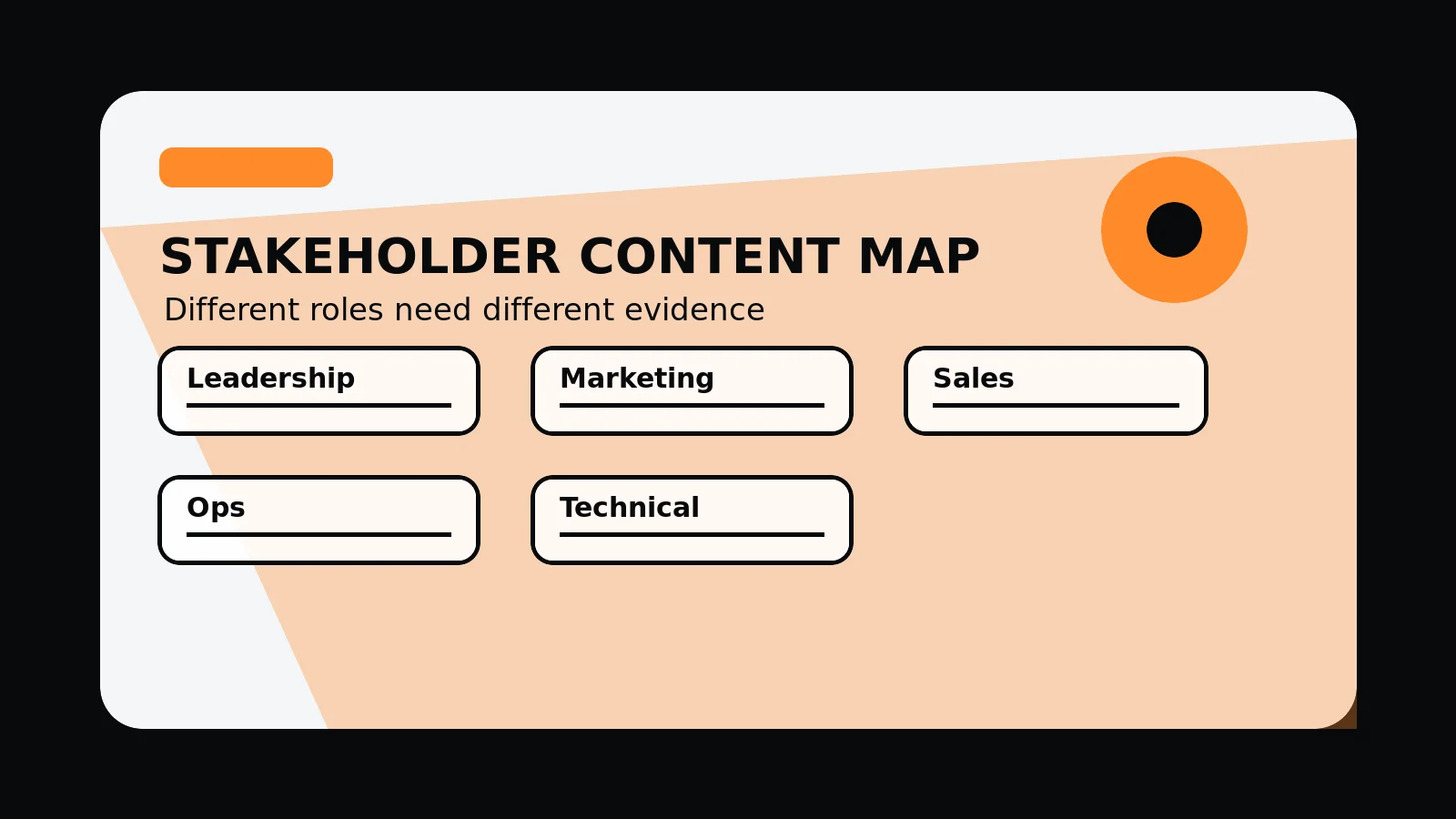
B2B stakeholder content map
- Leadership: positioning, commercial logic, risk, and confidence.
- Marketing: search routes, campaign paths, content flexibility, and brand execution detail.
- Sales: supporting detail, objections, qualification, and enquiry fit.
- Operations: process, dependencies, service reality, and delivery fit.
- Finance, procurement, and technical: credibility, detail, maintainability, and implementation signals.
Common mistakes to avoid
- Writing the site for one buyer while a committee makes the decision.
- Leaving procurement, finance, or technical concerns until the sales call.
- Publishing the same supporting detail for every stakeholder regardless of what they need.
What 760 Studios would review first
- Stakeholders underserved by current pages
- supporting detail and FAQ gaps by role
- Internal links that should support the buying committee
Questions this article answers
Why does a B2B website need a stakeholder map?
B2B decisions often involve several people. A stakeholder map prevents the site from serving only one role while leaving other decision-makers without detail.
Which stakeholders are usually missed?
Procurement, finance, operations, and technical evaluators are often missed because pages focus on marketing appeal before practical risk and implementation questions.
Where should stakeholder content appear?
Use service pages, supporting detail pages, process, pricing context, FAQs, and technical sections so each stakeholder can find relevant detail without a sales call.
How does this improve enquiry fit?
Better stakeholder content helps buyers self-qualify, understand scope, prepare better questions, and enter contact routes with more context.