Quick answer
Ecommerce Website Design Cost In The UK
Ecommerce website cost depends on the catalogue, product data, platform route, checkout responsibilities, integrations, SEO migration risk, and order-path testing. The quote should separate visual design from the operational decisions that make the store reliable.
Ecommerce cost depends on the operating model
An ecommerce website is not priced only by how many pages it has. The cost is shaped by how products are structured, where catalogue data lives, how checkout works, who owns fulfilment, and what has to be tested before orders can be trusted.
A simple product-led site with ready content is a different scope from a catalogue migration, headless frontend, custom checkout flow, or store rebuild that has to protect existing category URLs and analytics history.
- Catalogue size, category structure, filters, variants, and product attributes
- Product descriptions, photography, specifications, and supporting detail readiness
- Platform route, checkout ownership, payment provider, and order handling
- Shipping, tax, stock, fulfilment, email, and support requirements
- SEO, redirects, schema, sitemap, analytics, and launch monitoring
Share your catalogue size, platform state, checkout route, and content readiness before asking for a fixed ecommerce quote.
Get a 3-point project reviewThe biggest ecommerce scope drivers
The fastest way to make a store more expensive is to leave product data, platform decisions, payment routing, fulfilment rules, and content ownership unresolved until design has already started.
The safest quote separates design and frontend work from operational ecommerce decisions. That makes it plain which parts sit inside the website build and which parts depend on the commerce platform, payment provider, stock system, or client operations.
- New store versus redesign or migration
- Template-led checkout versus custom frontend and checkout handoff
- Manual product entry versus structured catalogue import
- working rule policy pages versus complex delivery, returns, or support rules
- Basic analytics versus detailed conversion, order, and search monitoring
How to compare ecommerce website quotes
A useful ecommerce quote should name what is included: discovery, catalogue structure, product page design, category templates, checkout planning, payment setup support, metadata, schema, form or enquiry routes, testing, and post-launch checks.
A cheaper quote can be fine for a small and simple store. It becomes risky when it excludes product content, mobile layouts, SEO preservation, order-route testing, policy pages, analytics, or handover.
- Which product and category templates are included?
- Who prepares, imports, checks, and approves product content?
- Which platform, checkout, payment, and fulfilment decisions are included?
- What happens to old product and category URLs during a redesign?
- Which browser, payment, analytics, sitemap, and Search Console checks happen after launch?
When a smaller first step is safer
If the catalogue is messy, the platform is undecided, or the existing store has unknown search value, a short audit or planning phase can be safer than quoting the full build immediately.
That first step should produce practical decisions: page list, product content checklist, platform route, checkout responsibilities, migration risks, analytics needs, and the minimum launch QA required for a reliable store.
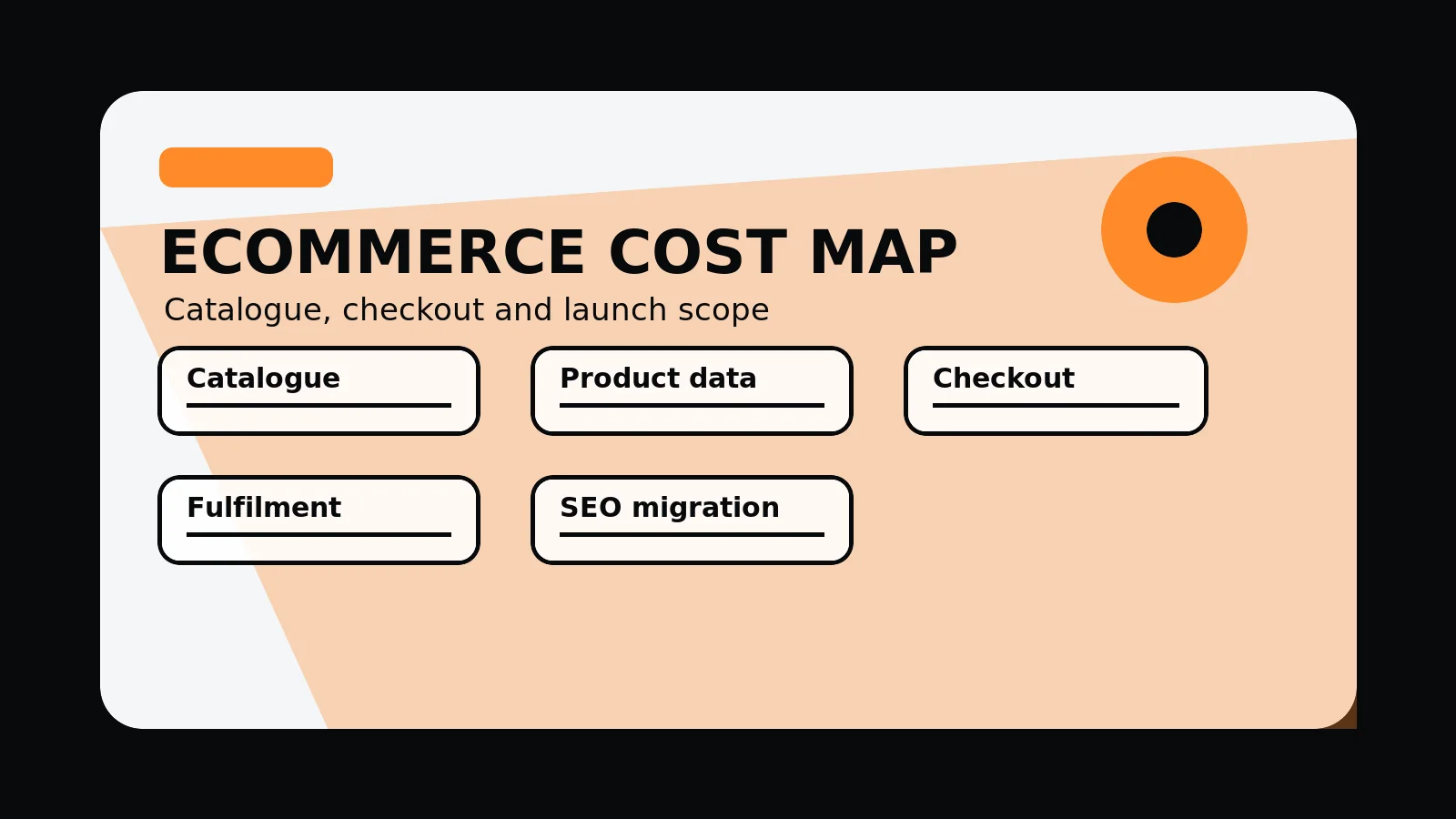
Ecommerce cost scope map
- Catalogue: categories, subcategories, product count, variants, attributes, filters, and import route.
- Content: product descriptions, images, specifications, policy pages, trust signals, and review owner.
- Platform: hosted commerce, CMS plugin, headless frontend, checkout handoff, or custom payment scope.
- Operations: stock, tax, shipping, fulfilment, transactional email, support, and returns handling.
- Launch: redirects, metadata, schema, sitemap, analytics, conversion events, order checks, and Search Console monitoring.
Common mistakes to avoid
- Comparing ecommerce quotes by page count while ignoring product data, checkout, fulfilment, and launch risk.
- Starting visual design before deciding platform, payment, policy, and product ownership.
- Replacing an existing store without checking product URLs, category URLs, metadata, redirects, and analytics.
What 760 Studios would review first
- Catalogue and platform scope
- Checkout, payment, and fulfilment risks
- First SEO and launch QA decisions before quote review
Questions this article answers
What makes an ecommerce website more expensive than a normal business website?
Ecommerce adds product structures, categories, variants, checkout decisions, payment routing, fulfilment rules, transactional emails, policy pages, analytics, and order-path testing. Those moving parts create more scope than static service pages.
Does product count affect ecommerce website cost?
Product count matters, but product data execution detail matters more. A small catalogue with complex variants can need more planning than a larger catalogue with clean fields, consistent images, and ready descriptions.
What should be checked before redesigning an ecommerce store?
Check product and category URLs, organic traffic, existing redirects, product data ownership, payment provider responsibilities, delivery rules, policy pages, analytics events, and how test orders will be verified.
When is a headless ecommerce route worth considering?
Headless ecommerce is worth considering when the frontend needs more design control, speed, content flexibility, or integration depth than the working rule storefront can provide. It should not be chosen only because it sounds more advanced.