Quick answer
How To Build High-Converting Service Pages
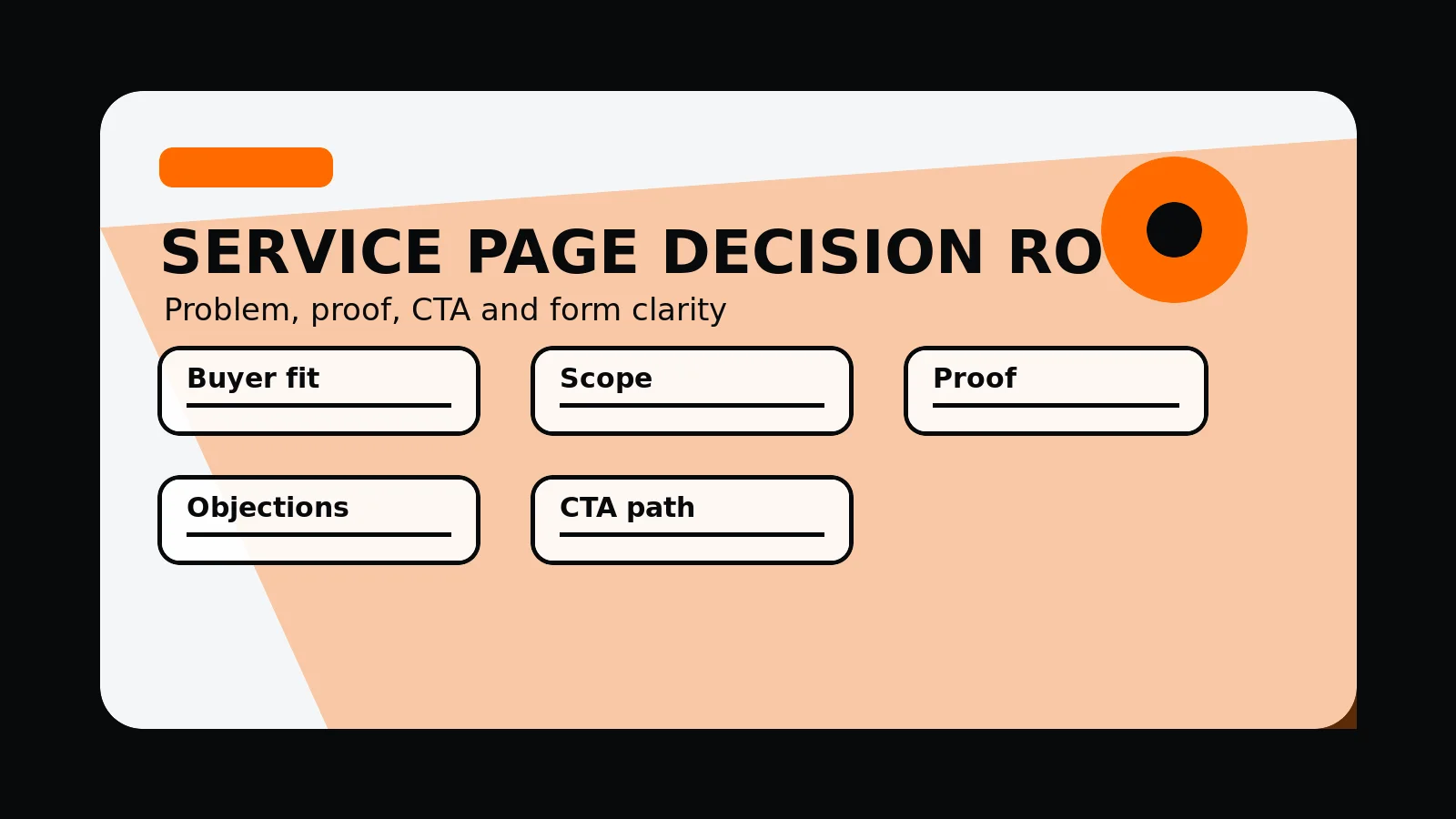
A high-converting service page explains the buyer problem, service fit, scope, supporting detail, objections, pricing route, next step, and form expectation. Conversion improves when the page reduces uncertainty before asking for contact.
A service page is a decision route
A service page has to do more than describe what the business sells. It should help the right buyer understand whether the service fits, what problem it solves, what is included, what supporting detail supports the offer, and what step to take next.
High-converting service pages are usually plain before they are persuasive. The page needs a defined audience, a specific problem, visible scope, confidence signals, pricing context where useful, and a conversion route that does not feel like a trap.
- Name the buyer, situation, problem, and service fit
- Explain what is included, excluded, and needed from the client
- Show supporting detail types such as work examples, method detail, reviews, or process artefacts
- Address common objections before the call to action
- Use one primary next step supported by secondary links for slower buyers
Send a priority service page and we will identify the first structure, supporting detail, CTA, form, and analytics risks to fix.
Get a 3-point project reviewThe minimum service page structure
The right order depends on the offer, but most service pages need a plain opening claim, buyer problem, service scope, process, supporting detail, FAQs, pricing route, and contact path.
The page should also make internal navigation easier. Buyers should be able to move from a service page to pricing, process, work examples, audits, and start-project routes without having to use the main menu.
- Hero: service, buyer fit, outcome direction, and primary CTA
- Problem: what the buyer is trying to fix or improve
- Scope: deliverables, responsibilities, boundaries, and options
- supporting detail: relevant detail with plain limits
- Process: how the project moves from review to launch
- CTA: form route, call route, expected response, and next step
Where conversion friction appears
Conversion friction often comes from uncertainty rather than weak button copy. Buyers hesitate when the page hides price signals, skips supporting detail, makes the process vague, or asks for contact before explaining what happens next.
Forms also need proper QA. Labels, required fields, validation, confirmation messages, email delivery, analytics events, and spam handling all affect whether a service page can turn interest into a reliable enquiry.
- Vague audience fit or unclear service boundaries
- No pricing route, scope range, or decision context
- Unsupported claims with no detail label
- Repeated CTAs that appear before the buyer has enough information
- Forms with weak labels, unclear errors, missing confirmation, or untested email delivery
- Analytics that cannot show which page, CTA, or form path generated the enquiry
What not to claim without measurement
A service page can be designed for easier to understand conversion without promising a specific conversion rate. Outcome claims need measurement, attribution, timeframe, and context before they are used as supporting detail.
The safer route is to show the conversion system: buyer fit, supporting detail, objections, CTA hierarchy, form reliability, analytics events, and post-launch review points. That gives the business something practical to improve without inventing results.
Service page conversion checklist
- Fit: buyer type, problem, urgency, service match, and situations where the service is not right.
- Offer: deliverables, boundaries, inputs, process, timeline cues, and pricing route.
- supporting detail: work examples, method detail, testimonials, reviews, or labelled reference material.
- CTA: one primary next step, secondary evaluation links, plain form expectations, and confirmation state.
- QA: mobile layout, speed, accessibility basics, analytics events, form delivery, and spam handling.
Common mistakes to avoid
- Treating a service page like a poster instead of a decision route.
- Adding repeated CTAs before explaining scope, supporting detail, pricing route, and next step.
- Publishing conversion promises that have not been measured.
What 760 Studios would review first
- Page job and buyer fit
- supporting detail, objection, and CTA hierarchy
- Form reliability and conversion event tracking
Questions this article answers
What should a service page explain before the CTA?
It should explain who the service is for, what problem it solves, what is included, what detail supports the offer, where the service may not fit, and what happens after the visitor takes action.
Why do service pages fail to convert?
They often fail because they repeat generic benefits, hide supporting detail, skip scope boundaries, use vague CTAs, ask for too much form detail, or do not answer pricing and process concerns.
How should supporting detail appear on a service page?
supporting detail should appear near the decision it supports. Use confirmed case studies, work examples, process detail, screenshots, testimonials, or QA artefacts rather than unsupported outcome claims.
What should be tracked on a service page?
Track CTA clicks, form starts, form completions, validation failures, source routes, scroll depth, and whether enquiries contain enough context for a useful response.