Quick answer
How To Build Website Pages For Complex B2B Offers
Pages for complex B2B offers should split the decision into plain blocks: buyer problem, fit, scope, process, supporting detail, risks, FAQs, commercial context, technical detail, and next step. The page should simplify evaluation without hiding important complexity.
Complex offers need structured detail
Build pages for complex B2B offers by separating the core problem, who it is for, what is included, supporting detail, process, risks, FAQs, and the next step.
The page should make complexity easier to evaluate by separating fit, scope, supporting detail, objections, and next steps into readable sections.
Send one complex offer and we will identify which page blocks should explain fit, scope, supporting detail, and risk.
Get a 3-point project reviewBreak complexity into decision blocks
Use these blocks to keep important detail visible without turning the page into a dense proposal document.
- Name the buyer problem clearly
- Define service boundaries
- Explain audience and use cases
- Use supporting detail or practical project detail
- Answer commercial and technical objections
- Link to pricing, process, and contact routes
Inputs for complex-offer pages
Bring these materials together before writing so each page can address the right concerns for the right stakeholder.
- Service page template
- Objection map
- Stakeholder review list
- supporting detail module plan
- Internal links to related services
Complex B2B page blocks
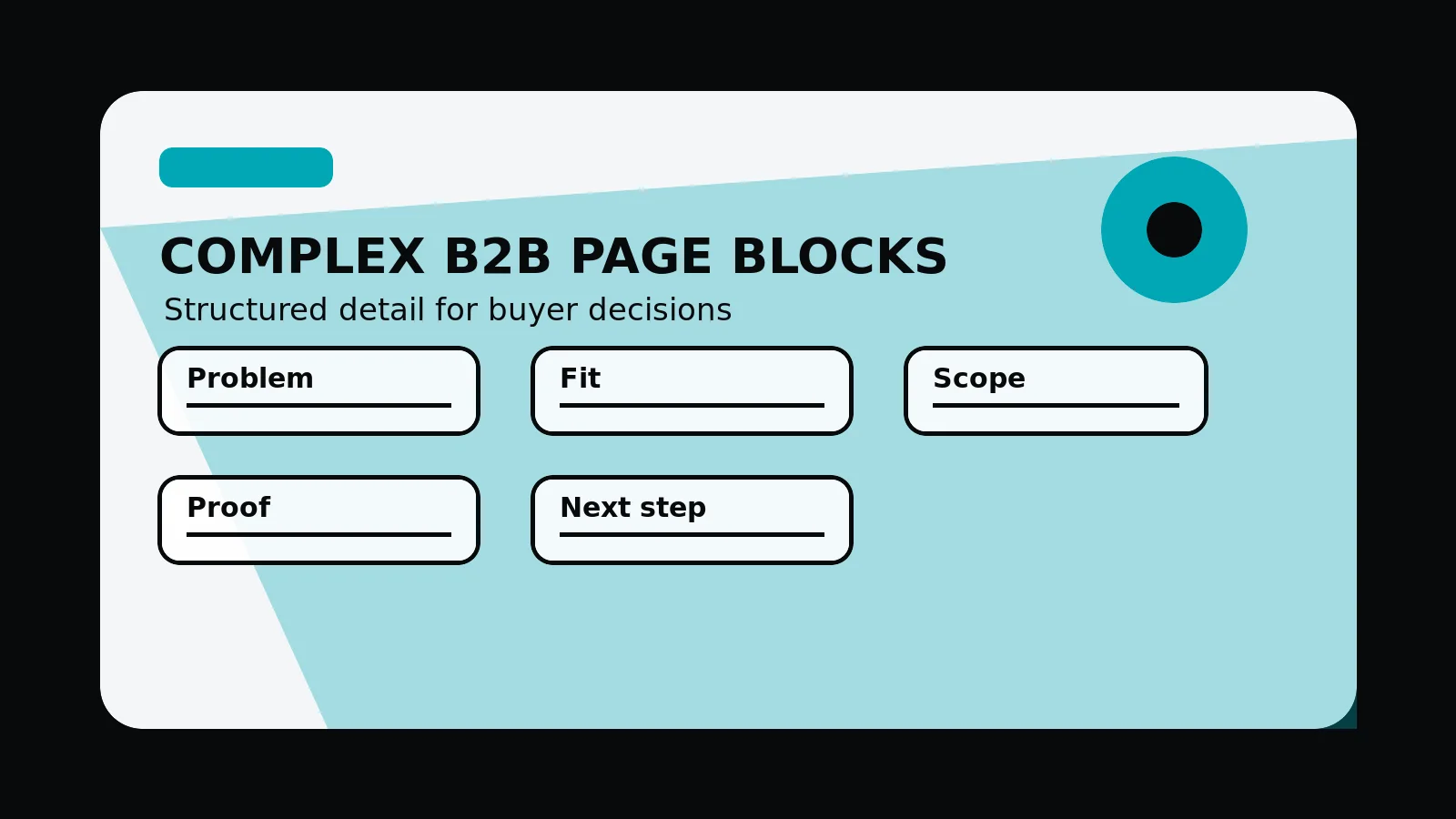
- Problem: name the specific buyer issue without flattening the complexity.
- Fit: explain who the offer is for and when it is not the right route.
- Scope: separate deliverables, dependencies, timelines, and decision boundaries.
- supporting detail: use client supporting detail or practical project detail near the detail it supports.
- Next step: route buyers to pricing context, process, project brief, or a qualified call.
Common mistakes to avoid
- Oversimplifying the offer until it no longer sounds useful.
- Adding too much detail without hierarchy or stakeholder routes.
- Forgetting commercial, technical, and operational objections.
What 760 Studios would review first
- Which details need their own page block
- Objections the current page does not answer
- supporting detail needed before the CTA
Questions this article answers
How long should a complex B2B page be?
It should be long enough to answer the buying questions but structured enough to scan. Use headings, bullets, supporting detail blocks, FAQs, and links rather than one dense page.
Should technical detail be on the main page?
Include enough technical detail to establish fit and credibility, then link to deeper technical pages or documentation where the detail would interrupt the main buyer journey.
How should objections be handled?
Handle objections near the relevant decision: scope concerns near deliverables, risk concerns near process, and commercial concerns near pricing or contact.
When should a complex offer become multiple pages?
Create multiple pages when audience, use case, sector, feature, or supporting detail needs are distinct enough that one page would become confusing.