Quick answer
What A Full-Scope Website Project Should Include
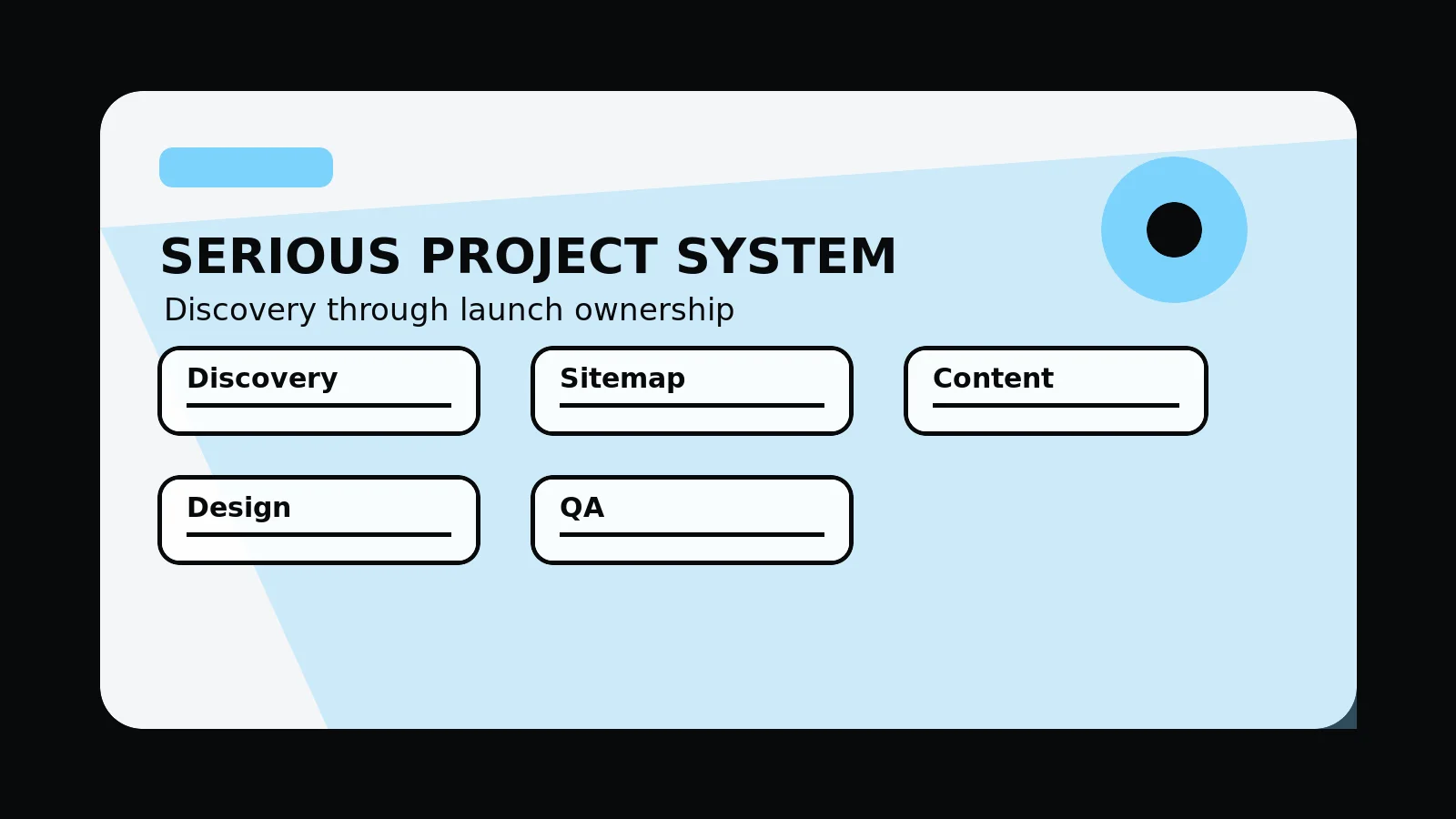
A full-scope website project includes discovery, sitemap planning, page briefs, content ownership, supporting detail gathering, responsive design, frontend implementation, SEO foundations, accessibility and performance checks, forms, analytics, launch QA, and a post-launch improvement route.
A proper project has visible ingredients
A proper project should include discovery, page architecture, message hierarchy, content inputs, visual direction, responsive design, frontend implementation, SEO foundations, form checks, launch QA, and post-launch priorities.
The project should be defined by the work needed to make the site useful after release, with plain owners for the decisions that shape execution detail.
Share the intended scope and we will identify which committed-project ingredients are missing before build starts.
Get a 3-point project reviewBuild the project around delivery stages
Use these stages to check whether the brief covers discovery, structure, content, design, development, search, launch, and handover.
- Discovery and buyer journey map
- Sitemap and page jobs
- Content and supporting detail plan
- Design system and mobile layouts
- Metadata, schema, sitemap, robots, and canonical checks
- Forms, accessibility smoke tests, and browser QA
Artefacts that show the project is ready
Collect these items before design and build so progress is based on confirmed decisions rather than assumptions.
- confirmed sitemap
- Page brief
- Component list
- QA checklist
- Post-launch improvement notes
committed website project ingredients
- Discovery: business goals, audience, offer, existing-site detail, competitors, and risk.
- Planning: sitemap, page jobs, content owners, supporting detail assets, navigation, and review gates.
- Design: responsive layouts, component states, typography, imagery, CTAs, and accessibility basics.
- Development: crawlable HTML, metadata, schema, forms, analytics, performance, and deployment setup.
- Launch: redirects where needed, browser QA, mobile checks, stakeholder review, and post-launch priorities.
Common mistakes to avoid
- Treating design as the whole project while content, SEO, forms, and launch checks are unresolved.
- Starting build before page ownership, supporting detail assets, and review authority are plain.
- Calling a site complete before testing mobile, forms, metadata, schema, and production routes.
What 760 Studios would review first
- Which delivery ingredients are missing
- What should be done before visual review
- Which launch checks need ownership
Questions this article answers
What separates a full-scope website project from a simple design job?
A proper project connects strategy, content, design, development, SEO, QA, and launch ownership. It is judged by whether the site works after release, not only by screenshots.
Which documents should exist before design starts?
Useful documents include the sitemap, page brief, content owner list, supporting detail inventory, technical requirements, review timeline, and launch-risk notes.
What should be checked before launch?
Check mobile layouts, browser rendering, forms, metadata, canonical URLs, structured data, sitemap, redirects, accessibility basics, analytics events, and production deployment status.
Why does handover matter?
Handover matters because the website will change. Owners need to know how pages are updated, what should be monitored, and which changes should be scoped rather than improvised.