Quick answer
What supporting detail Should A B2B Website Show?
A B2B website should show supporting detail that reduces buying risk: confirmed case studies, relevant work examples, process detail, QA artefacts, service architecture, delivery working rules, screenshots, testimonials, and plain limits around what is being claimed.
B2B supporting detail should lower perceived risk
A B2B website should show confirmed case studies where available, plus practical project detail such as service architecture, process detail, QA checklists, risk registers, and launch detail.
When confirmed outcomes are limited, method detail and delivery artefacts can still show how the business works and where claims are bounded.
Send the current supporting detail assets and we will classify what can be shown, rewritten, confirmed, or held back.
Get a 3-point project reviewChoose supporting detail by claim type
Use these supporting detail types to support service claims, process claims, execution detail claims, and delivery claims without inventing results.
- Use client supporting detail only where confirmed
- Separate examples from live outcomes
- Show process and delivery working rules
- Publish service architecture and decision frameworks
- Add QA and risk-reduction artefacts
- Avoid unsupported metrics or testimonials
supporting detail assets to approve
Collect these materials before publishing so every supporting detail module has a source, an owner, and plain limits.
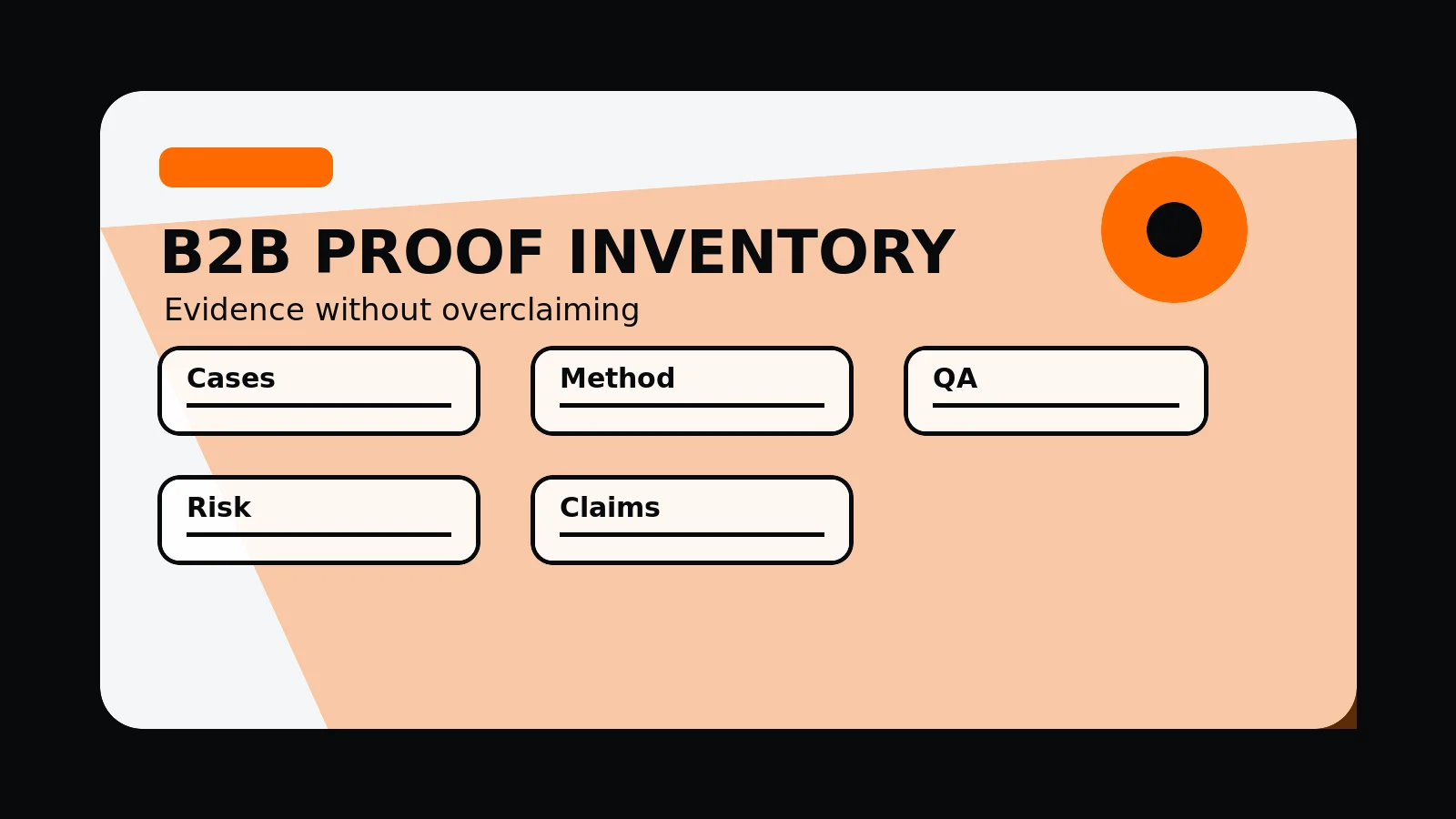
- supporting detail source inventory
- Case-study review status
- practical project detail modules
- Risk register
- QA checklist
B2B supporting detail inventory
- Client supporting detail: confirmed case studies, testimonials, screenshots, or public references.
- practical project detail: process, QA artefacts, technical working rules, and delivery checkpoints.
- Service supporting detail: examples that match the specific offer and buyer concern.
- Risk supporting detail: migration plans, support routes, accessibility, performance, and launch detail.
- Claim limits: what the page can say without inventing metrics, outcomes, or review.
Common mistakes to avoid
- Publishing supporting detail claims before review.
- Using screenshots without context, scope, or decision detail.
- Replacing supporting detail with broad adjectives that do not reduce buying risk.
What 760 Studios would review first
- Which supporting detail assets can be public
- Where method detail should replace missing client supporting detail
- Unsupported claims to remove
Questions this article answers
What if a business cannot publish client case studies?
Use practical project detail instead: process detail, service architecture, QA checklists, technical working rules, screenshots without sensitive data, or anonymised examples where confirmed.
Why are unsupported metrics risky?
Unsupported metrics can damage trust and create review problems. If a number cannot be sourced and explained, the page should use documented project detail instead.
Where should B2B supporting detail appear?
Place supporting detail near the claim or decision it supports: service scope, process risk, pricing confidence, technical competence, or final contact.
How can supporting detail help answer engines?
supporting detail gives answer systems specific, crawlable context about services, work, methods, dates, and claims when it is visible and linked clearly.