Quick answer
When Is Next.js The Right Choice For A Marketing Website?
Next.js is the right choice for a marketing website when route control, reusable components, server-rendered content, metadata, sitemap output, schema, performance, previews, and deployment workflow matter more than the simplicity of a template platform.
Choose Next.js for control, not fashion
Next.js is right when the site needs custom routing, reusable components, server-rendered content, metadata control, sitemap and robots routes, schema, performance discipline, and Vercel previews.
Next.js is strongest when the marketing website needs route control, structured components, technical SEO, performance discipline, and deployment workflow.
Send the route list and editing needs and we will tell you whether Next.js is justified for the marketing site.
Get a 3-point project reviewCheck whether the project needs custom control
Use these signals to decide whether Next.js adds useful control or whether a simpler platform would be easier to own.
- Use Next.js for complex service, SaaS, B2B, or content-heavy sites
- Use it when metadata, sitemap, schema, and routing need control
- Use it when reusable components improve maintainability
- Avoid it for tiny sites where a simple platform is enough
- Define content ownership before custom build starts
detail for the platform decision
Bring these inputs before choosing the stack so scope, editing, metadata, and QA needs are visible.
- Route inventory
- Component model
- Metadata and sitemap plan
- Deployment workflow
- QA checklist
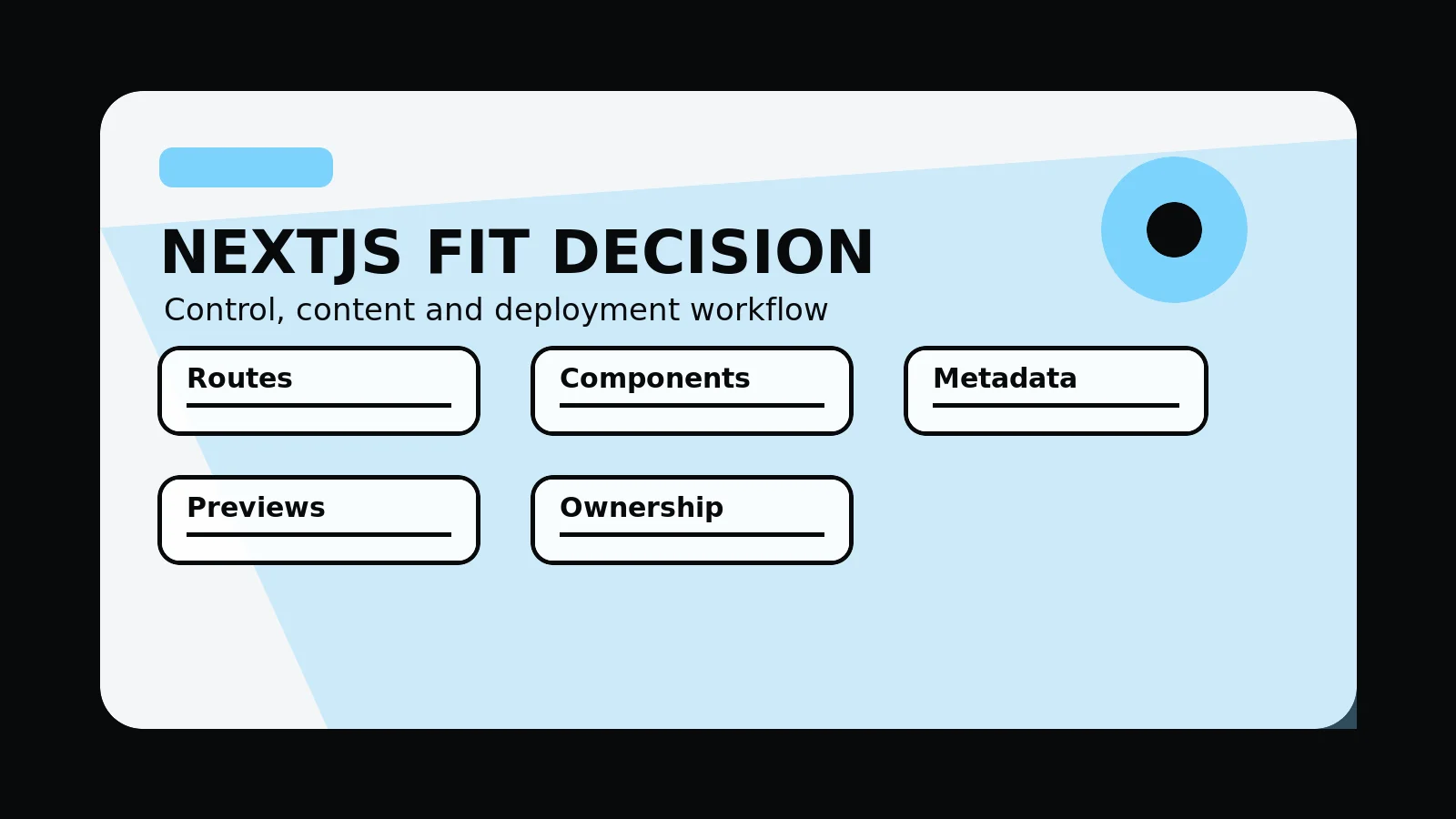
Next.js fit decision
- Route control: custom page types, redirects, metadata, and sitemap output matter.
- Component control: reusable layouts and content structures reduce long-term drift.
- Performance: server-rendered content, image control, and script discipline are important.
- Workflow: previews, pull requests, QA, and Vercel deployment fit the team.
- Ownership: content editing, developer support, and future page creation are plain.
Common mistakes to avoid
- Choosing Next.js because it sounds advanced, not because the site needs its control.
- Ignoring content ownership and editing workflow.
- Using a custom stack for a tiny site that a simpler platform could manage.
What 760 Studios would review first
- Whether Next.js is justified
- Which routes need custom control
- Editing and maintenance risks
Questions this article answers
When is Next.js too much for a marketing website?
It may be too much when the site is tiny, the content is simple, no custom route control is needed, and the team needs a low-code editing experience more than technical flexibility.
Why choose Next.js for SEO-focused pages?
Next.js can give precise control over rendered content, metadata, canonical URLs, sitemap routes, schema, redirects, performance, and deployment checks.
What ownership should be decided first?
Decide who edits content, who maintains components, who reviews metadata, who handles deployments, and how new pages are added after launch.
Can Next.js work for content-heavy websites?
Yes, when the content model, page templates, internal links, metadata, and publishing workflow are planned before build.