Quick answer
What Makes The Best Web Design Agency? Criteria To Check
The best web design agency for a project is the one with the right fit, detail, process, technical capability, SEO discipline, communication style, and launch accountability for that specific business. There is no universal best agency outside the project context.
Best should mean best fit, not a ranking claim
There is no useful single best web design agency for every business. The right agency depends on the buyer's market, supporting detail state, content readiness, technical needs, budget, timeline, and appetite for post-launch improvement.
A committed comparison should ask which agency can own the commercial job of the website: clarify the offer, structure the pages, design the experience, build it cleanly, protect search foundations, and launch it responsibly.
- Does the agency understand the business model and buyer journey?
- Can they explain page structure before visual style?
- Do they show supported supporting detail rather than broad claims?
- Are technical SEO, performance, forms, and launch checks included?
- Is the pricing route tied to scope rather than vague packages?
Send the brief and current site and we will identify which agency-selection criteria matter most before you compare proposals.
Get a 3-point project reviewCriteria that matter before portfolio taste
Portfolio execution detail matters, but taste alone does not prove project fit. A polished screenshot is weaker when the agency cannot explain the brief, constraints, page decisions, technical implementation, or launch checks behind it.
The strongest agencies make the project inspectable. Their process should turn business inputs into page jobs, content requirements, design decisions, build responsibilities, QA steps, and future improvement routes.
- Discovery and current-site review
- Content hierarchy, service architecture, and supporting detail planning
- Responsive design execution detail and accessibility basics
- Frontend maintainability, metadata, schema, sitemap, and redirects where needed
- Form, analytics, browser, and deployment checks
supporting detail to request before choosing an agency
The right supporting detail depends on the project. Some buyers need named client case studies. Others need method detail, process artefacts, technical examples, or plain launch QA working rules before trust is justified.
Ask what each supporting detail item actually supports. A visual case study supports design execution detail. A migration checklist supports redesign discipline. A performance example supports frontend care. None of these should be stretched into unsupported ranking, revenue, or award claims.
- Relevant work or clearly labelled example structure
- Process artefacts such as sitemap, scope, or QA examples
- Supported testimonials, outcomes, or metrics where available
- Technical working rules for performance, metadata, schema, and deployment
- A plain explanation of what is not proven yet
Red flags in best-agency searches
Be cautious when a provider promises rankings, claims to be the best without detail, hides who writes content, avoids technical scope, or cannot explain how the site will be tested before launch.
A good agency can still say no. If the project needs a simple template, a specialist ecommerce platform team, a full product engineering squad, or heavy paid-media management, the honest answer may be a narrower route or a different partner.
Agency evaluation scorecard
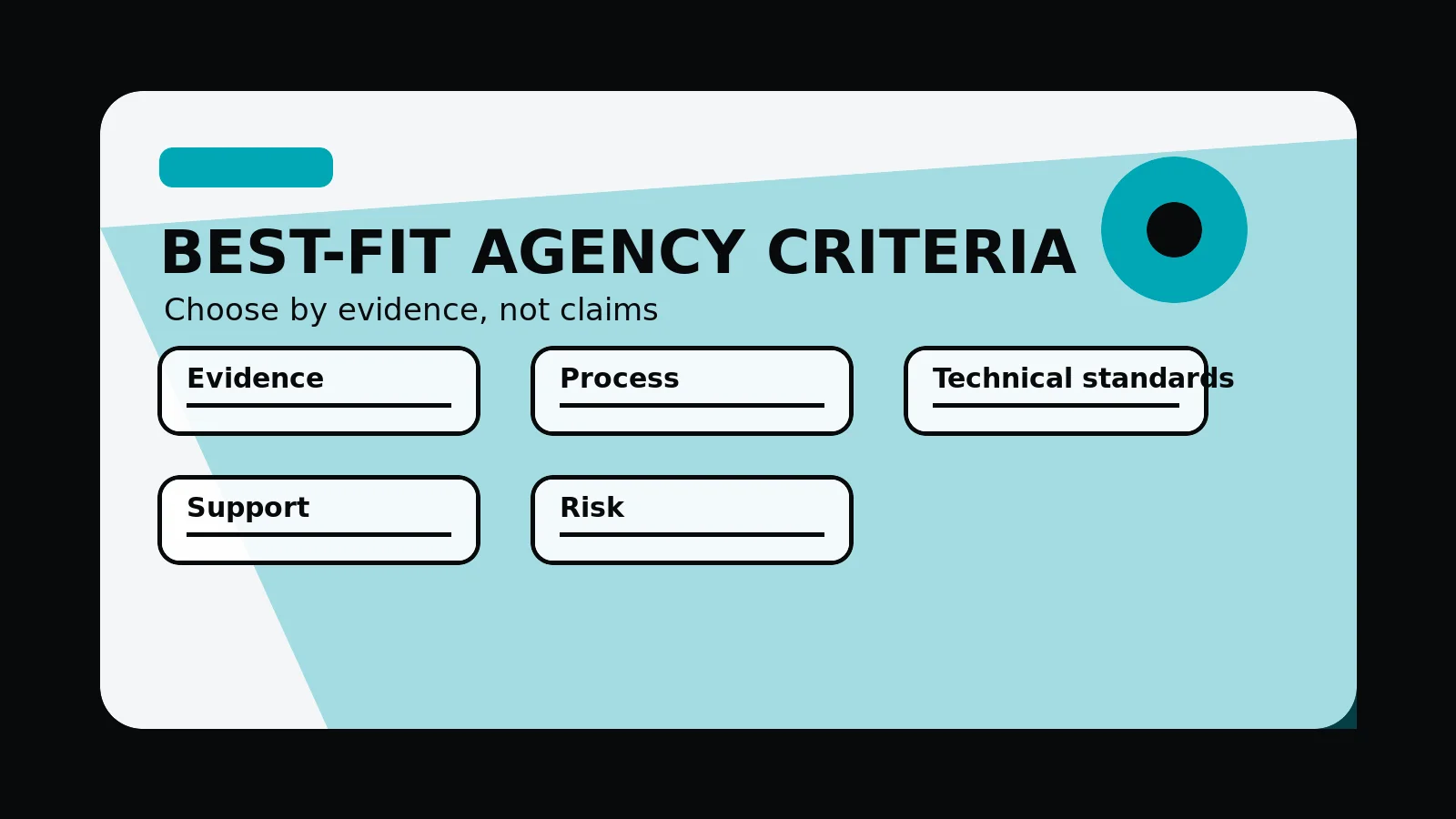
- Fit: business model, buyer journey, market, supporting detail state, content readiness, and technical needs.
- Scope: discovery, page architecture, copy direction, design, build, SEO, forms, QA, and handover.
- supporting detail: relevant work, labelled detail, process artefacts, technical working rules, and supported outcomes.
- Process: decision owners, review gates, content responsibilities, launch plan, and post-launch route.
- Risk: unsupported claims, vague exclusions, hidden maintenance, weak migration planning, and no browser QA.
Common mistakes to avoid
- Choosing the agency that says it is best without checking detail, fit, and scope.
- Comparing portfolio screenshots while ignoring content, technical SEO, performance, forms, and launch checks.
- Approving a proposal that does not explain what the buyer must provide or what is excluded.
What 760 Studios would review first
- Which agency route fits the project
- What supporting detail should be requested before review
- Which scope risks should be clarified before choosing
Questions this article answers
What criteria identify the best web design agency for a project?
Use criteria around project fit, relevant detail, scope ownership, content approach, frontend execution detail, SEO foundations, accessibility and performance checks, launch QA, and support after release.
Why is a best-agency claim risky without context?
A claim like best agency is weak unless it explains best for whom, for which type of website, at what budget, with which responsibilities, and against what detail.
How should supporting detail be checked before hiring an agency?
Ask whether work examples are current, confirmed, relevant, and supported by context. Look for process detail and technical working rules as well as visual screenshots.
What should be clarified before selecting an agency?
Clarify scope boundaries, content inputs, supporting detail ownership, technical implementation, SEO tasks, migration risk, review gates, launch checks, payment schedule, and post-launch support.