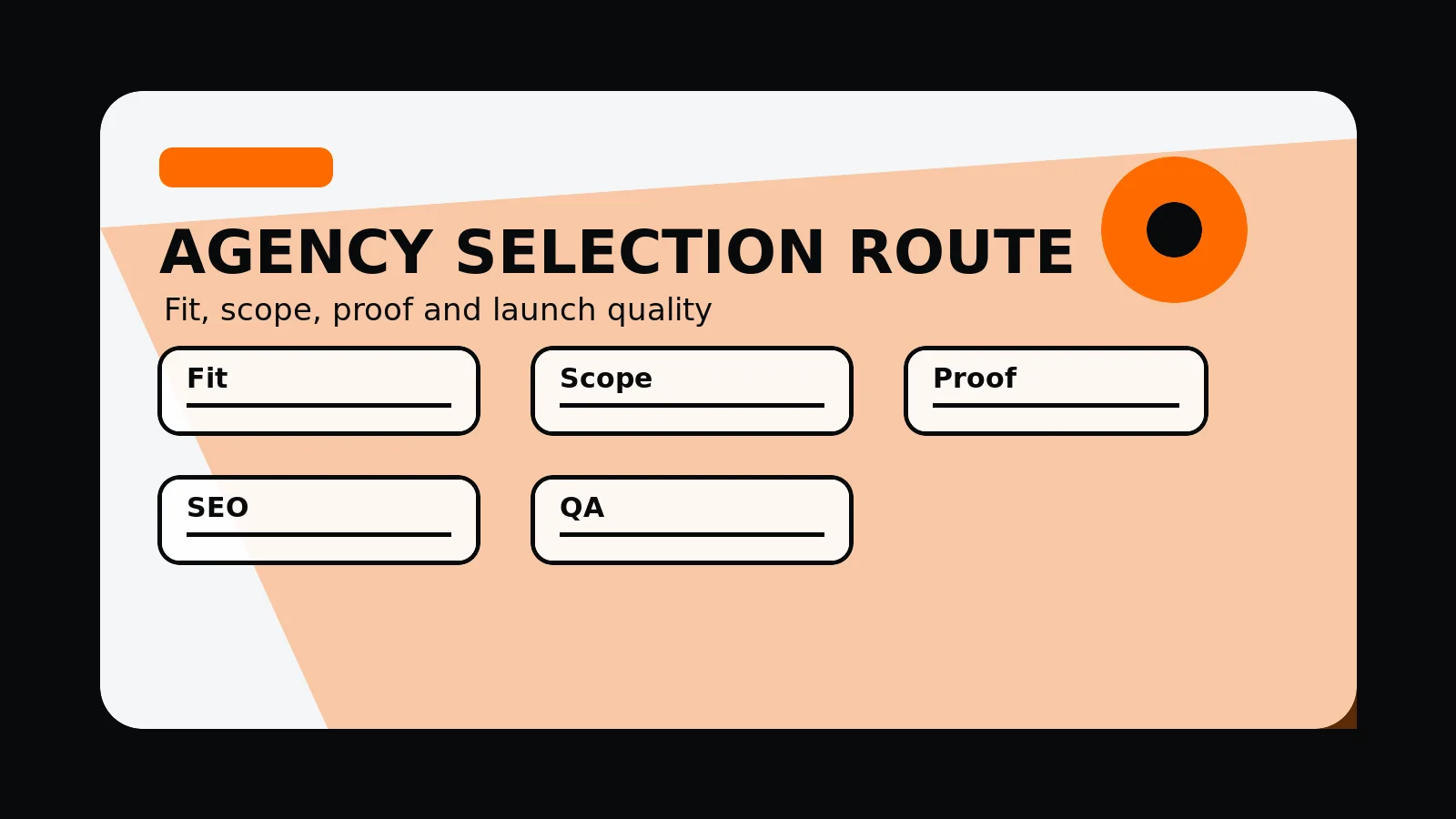
Quick answer
How To Choose A Web Design Agency
Choose a web design agency by checking fit, scope clarity, supporting detail, technical working rules, SEO foundations, launch process, and post-launch ownership. The right agency should explain how the website will support business decisions, not only how it will look.
Start with the job the website has to do
A good agency should ask about the audience, offer, competitors, supporting detail, content, search requirements, and commercial goal before talking about visuals.
If the brief is unclear, the project should start with an audit or discovery phase rather than jumping straight into design.
Compare your project against our engagement model.
Get a 3-point project reviewCompare the full delivery system
Design execution detail matters, but it is only one part of the decision. The site also needs page structure, responsive design, clean frontend implementation, SEO foundations, launch QA, and a plan for future improvements.
Ask how the agency handles page jobs, mobile layouts, metadata, schema, redirects, image performance, forms, hosting, and handover.
- Strategy and structure
- Visual direction and responsive design
- Frontend execution detail and maintainability
- SEO and AEO foundations
- supporting detail, process, and pricing transparency
Demand accountable SEO foundations
Strong agencies focus on the work they control: crawlability, content usefulness, metadata, schema, performance, internal links, and useful supporting detail.
Choose the partner that gives you a plain route from business problem to launch-ready website with accountable search foundations.
Agency comparison scorecard
- Strategy: does the agency ask about audience, offer, supporting detail, objections, and page jobs?
- Design: can they explain hierarchy, mobile layout, supporting detail placement, and conversion choices?
- Development: do they discuss maintainability, performance, forms, metadata, and deployment?
- SEO: do they explain crawlability, content usefulness, schema, links, and realistic growth foundations?
- Process: are timelines, responsibilities, review gates, and launch checks explicit?
Common mistakes to avoid
- Choosing the most polished pitch without checking how the site will be built and maintained.
- Choosing search promises instead of accountable SEO foundations.
- Skipping pricing transparency, portfolio execution detail, and post-launch support questions.
What 760 Studios would review first
- Whether your project fits audit, starter, high-end, redesign, app, or bespoke route
- What questions to ask before approving a proposal
- Which risks should be clarified before a call
Questions this article answers
What should matter most when choosing a web design agency?
Fit matters most: the agency should understand the business model, buyer journey, content state, supporting detail requirements, technical needs, budget range, and launch risk.
How can a buyer compare agency proposals fairly?
Compare the included work, exclusions, assumptions, content responsibilities, design process, build method, SEO tasks, QA checks, timeline, handover, and support route.
What is a warning sign in a web design proposal?
Be cautious when a proposal promises rankings, hides exclusions, skips content ownership, avoids launch QA, gives no migration plan, or cannot explain how supporting detail and claims will be verified.
Should portfolio execution detail be enough to choose an agency?
Portfolio execution detail helps, but it is not enough. Ask how the work was scoped, built, tested, maintained, and connected to the client’s actual commercial problem.