Quick answer
Entity And Schema Planning Guide For Service Websites
Entity and schema planning works when the visible website, canonical URLs, metadata, internal links, and structured data all describe the same business facts. Schema should clarify live services and content, not invent authority the page does not show.
Entity SEO starts with clarity
A service website should make the business entity easy to understand before adding advanced markup. The page copy, navigation, headings, internal links, and schema should all describe the same offer.
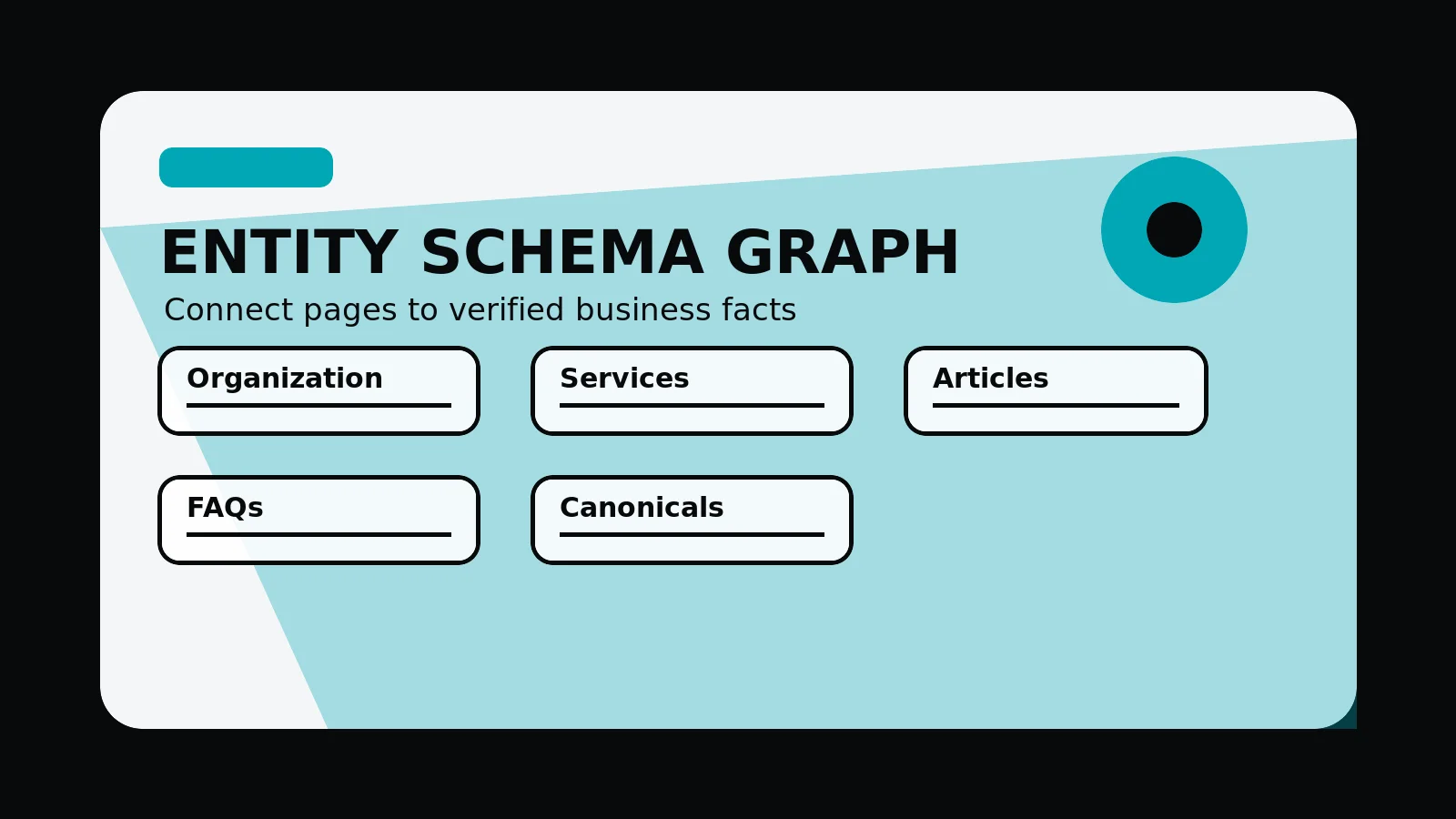
The goal is not to add every schema type possible. The goal is to remove ambiguity and connect the organization to its verified services, articles, work examples, markets, and contact routes.
- Organization and WebSite signals at the root
- Service entities connected to service pages
- Article entities for substantial guides
- CreativeWork entities for work examples
- FAQ entities only where answers are visible
Ask us to map your organization, service, article, work, and FAQ entities before a rebuild.
Get a 3-point project reviewHow to stitch the graph safely
Use stable canonical URLs and identifiers so pages relate back to the organization and website. Keep the same names, descriptions, service types, and page purposes across metadata, schema, sitemap, and internal links.
Avoid schema that claims reviews, ratings, locations, client work, awards, prices, or outcomes that users cannot verify on the page.
- Use route-level WebPage schema for important pages
- Connect service pages back to the Organization entity
- Add breadcrumb schema to clarify hierarchy
- Use llms.txt and sitemap routes to expose canonical pages
- Keep robots, canonicals, and sitemap rules consistent
Why this matters for answer engines
Search engines and answer engines need unambiguous statements. A page should answer the buyer question directly, then support it with supporting detail, process, pricing signals, FAQs, and links to the next useful page.
That makes the site easier for humans to evaluate and easier for crawlers to understand through plain, published authority signals.
Entity schema planning checklist
- Define the organization entity and the services it genuinely offers.
- Map each important page to a visible page purpose and canonical URL.
- Use Service schema for live service pages and buyer-intent landing pages.
- Use Article or BlogPosting schema for substantial guide content.
- Use FAQ schema only when the same questions and answers are visible on the page.
Common mistakes to avoid
- Adding schema types because they look advanced rather than because they match the page.
- Claiming reviews, ratings, offices, awards, or outcomes that are not visible and supportable.
- Leaving entity signals inconsistent across metadata, headings, internal links, and sitemap output.
What 760 Studios would review first
- Primary entity and service graph
- Route-level schema opportunities
- Unsupported claims to remove before launch
Questions this article answers
What is entity SEO for a service website?
Entity SEO makes the business, services, locations, articles, supporting detail, and contact routes easier to understand as connected facts across the site rather than isolated pages.
Which schema types usually matter first?
Start with Organization, WebSite, WebPage, BreadcrumbList, Service, BlogPosting or Article, and FAQPage where the visible page content supports those entities.
Why should schema not overclaim?
Unsupported structured data can conflict with visible content. The safer approach is to mark up what users can verify on the page and keep entity signals consistent.
How does schema help answer engines?
Schema helps answer systems connect the page topic to the business, service, author, date, image, FAQs, and related routes when those signals match crawlable content.