Quick answer
Technical SEO Audit Checklist For Agency Websites
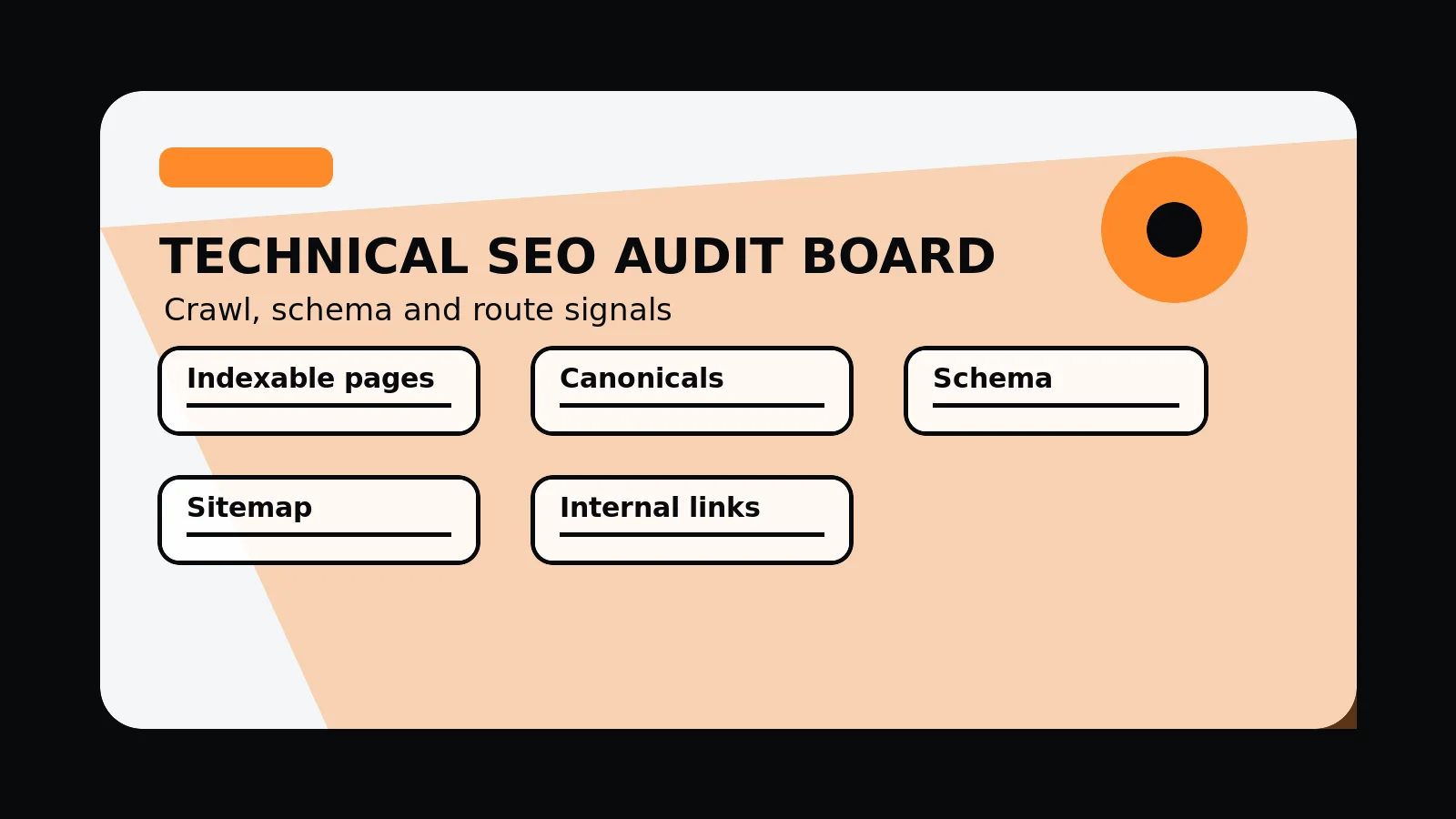
A technical SEO audit checks whether important pages can be crawled, published, understood, internally linked, and trusted. The audit should turn metadata, canonical, sitemap, robots, schema, speed, and content findings into prioritized fixes.
Start with the indexable page set
The first audit question is simple: which pages deserve to be published, and why should each one exist for a buyer?
That page set should match the sitemap, navigation, internal links, canonicals, robots rules, and visible content. If those signals disagree, crawlers and users get mixed instructions.
- Homepage, services, pricing, work, process, contact, and priority content assets
- Service and buyer-route pages with distinct purpose
- Location pages only where useful local context exists
- Indexability checks for support pages that are public but lower-priority search targets
Send the site and priority URLs for a technical SEO review before adding more pages.
Get a 3-point project reviewSchema should match visible content
Structured data should describe the page that users can inspect. FAQ schema should only appear when the same questions and answers are visible. Service schema should match the actual service page.
The strongest schema setup is consistent: Organization, WebSite, WebPage, Breadcrumb, Service, Article, CreativeWork, and FAQ entities should connect through canonical URLs and stable identifiers.
- Unique titles and descriptions
- Canonical URLs that match the route
- Breadcrumbs for navigational context
- Service schema for service and buyer-intent pages
- FAQ schema only for visible FAQs
Technical SEO should lead to action
An audit is only useful when it creates a prioritized implementation plan. The fixes should distinguish between blocking issues, execution detail improvements, and future content opportunities.
For a redesign, the audit should happen before visual work removes pages, changes URLs, or hides useful content.
Technical SEO audit map
- Indexable page set: decide which public routes need sitemap inclusion and which need better structured content before expansion.
- Metadata: check unique titles, descriptions, canonical URLs, and Open Graph previews.
- Structured data: match Organization, WebPage, Service, Article, FAQ, and Breadcrumb schema to visible content.
- Crawlability: confirm important copy is rendered as crawlable HTML.
- Internal links: connect service, pricing, work, guide, and contact pages around buyer intent.
Common mistakes to avoid
- Publishing many similar pages before deciding which ones are genuinely useful.
- Adding FAQ schema to pages where the questions are not visible.
- Letting sitemap, robots, canonical, and navigation signals contradict each other.
What 760 Studios would review first
- Sitemap and indexability rules
- Schema and visible content alignment
- Internal link gaps around commercial pages
Questions this article answers
What should a technical SEO audit check first?
Start with the indexable page set, sitemap coverage, canonical URLs, robots rules, status codes, rendered content, titles, descriptions, headings, internal links, and structured data.
Why should schema match visible content?
Structured data should describe what users can inspect on the page. Hidden or unsupported schema can create trust problems and does not fix weak content.
How should technical SEO findings be prioritized?
Prioritize blockers first: crawl/index problems, canonical conflicts, broken internal links, missing metadata on commercial pages, invalid schema, form issues, and migration risks.
What is the AEO value of a technical SEO audit?
AEO depends on clarity. The audit helps make pages crawlable, canonical, structured, internally connected, and specific enough for answer systems to interpret.