Quick answer
How To Build Local SEO Pages Without Doorway Risk
Build local SEO pages only when each page has a distinct buyer reason, accurate geography wording, useful service context, confirmed supporting detail where available, and internal links that help users. Avoid copied city pages and unsupported local claims.
Local pages need market substance
Build local SEO pages only when they have a distinct buyer reason to exist. Use accurate remote-first language, useful market context, confirmed supporting detail where available, and no fake offices, staff, reviews, or local outcomes.
A location page should help buyers in that market understand service fit, supporting detail limits, geography wording, and next steps without pretending to be something it is not.
Send the location list and we will identify which pages have enough market substance to publish.
Get a 3-point project reviewBuild local pages by usefulness threshold
Use these rules to decide which markets deserve public pages and which should wait until better structured context exists.
- Separate priority published markets from supporting pages
- Use distinct city or regional buyer context
- Avoid fake office and local staff claims
- Add supported supporting detail only where available
- unpublished support pages until they justify publication
- Keep Republic of Ireland and Northern Ireland wording accurate
detail for local-page review
Collect these inputs so every local page has accurate wording, useful links, and plain limits around local claims.
- Priority market list
- Local supporting detail policy
- unpublished/sitemap management
- Geography wording check
- Internal links to relevant buyer routes
Local page execution detail threshold
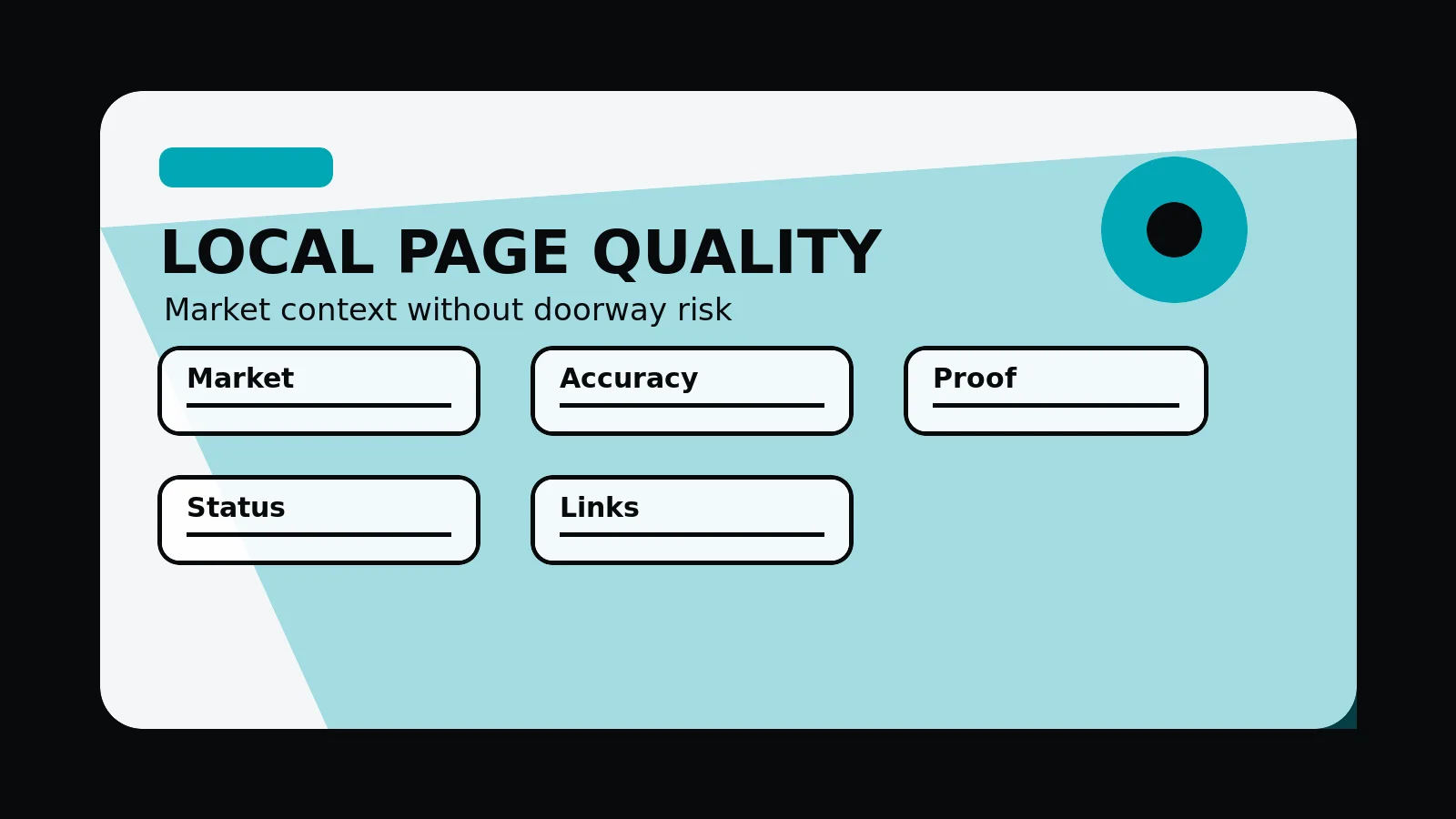
- Market reason: why the location deserves a page and which buyers it helps.
- Accuracy: service-area wording, remote delivery, offices, staff, reviews, and supporting detail are truthful.
- Distinct content: market context, service fit, supporting detail limits, FAQs, and next route are not copied.
- Page status: priority, support, draft, merge, or retire is plain.
- Links: location pages connect to services, pricing, supporting detail, process, and contact routes.
Common mistakes to avoid
- Publishing many city pages with swapped place names.
- Claiming local offices, staff, reviews, or outcomes without review.
- Adding locations before priority market pages have useful content and links.
What 760 Studios would review first
- Location pages with weak market context
- Unsupported local claims
- Which markets should be published, improved, merged, or held back
Questions this article answers
What makes a local SEO page useful?
It gives buyers in that market specific service context, accurate geography language, relevant links, supporting detail limits, FAQs, and a plain next step.
What is doorway-page risk?
Doorway-page risk appears when many similar pages are created mainly for search queries and do not give users distinct value before sending them elsewhere.
Can a remote-first business have location pages?
Yes, if the wording is accurate and the page explains service-area relevance without pretending there is a local office or local team.
When should a location page be held back?
Hold it back when the market context, service fit, supporting detail policy, local wording, or internal links are too weak to justify a standalone page.