Quick answer
How To Redesign A Website Without Losing SEO
A website redesign can protect SEO when search demand is treated as a project constraint. Preserve proven pages, map intent into the new structure, test crawl signals on staging, and monitor priority routes after release.
SEO preservation is a redesign workstream
Redesign without losing SEO by treating search visibility as a project asset. Capture current demand, protect valuable pages and backlinks, brief new templates around existing intent, rehearse crawl signals in staging, and monitor priority queries, forms, and published pages after release.
The safest redesigns make search-critical decisions visible early so design, content, development, and launch QA all protect the same demand.
Send the current sitemap and redesign scope and we will identify the pages, signals, and checks that need protection.
Get a 3-point project reviewProtect demand before approving design
Use these controls to keep the redesign from becoming a visual refresh that quietly drops useful pages, supporting detail, links, or search intent.
- Build a preservation brief from analytics, Search Console, backlinks, enquiries, and sales-useful pages
- Mark non-negotiable pages, supporting detail, copy sections, headings, FAQs, and internal links before design review
- Translate old intent into the new navigation and template system instead of only matching URLs
- Review staging HTML, canonicals, page titles, schema, image alt text, forms, and mobile layout before launch
- Watch priority routes, query groups, 404s, conversions, and sitemap coverage after release
detail for redesign SEO control
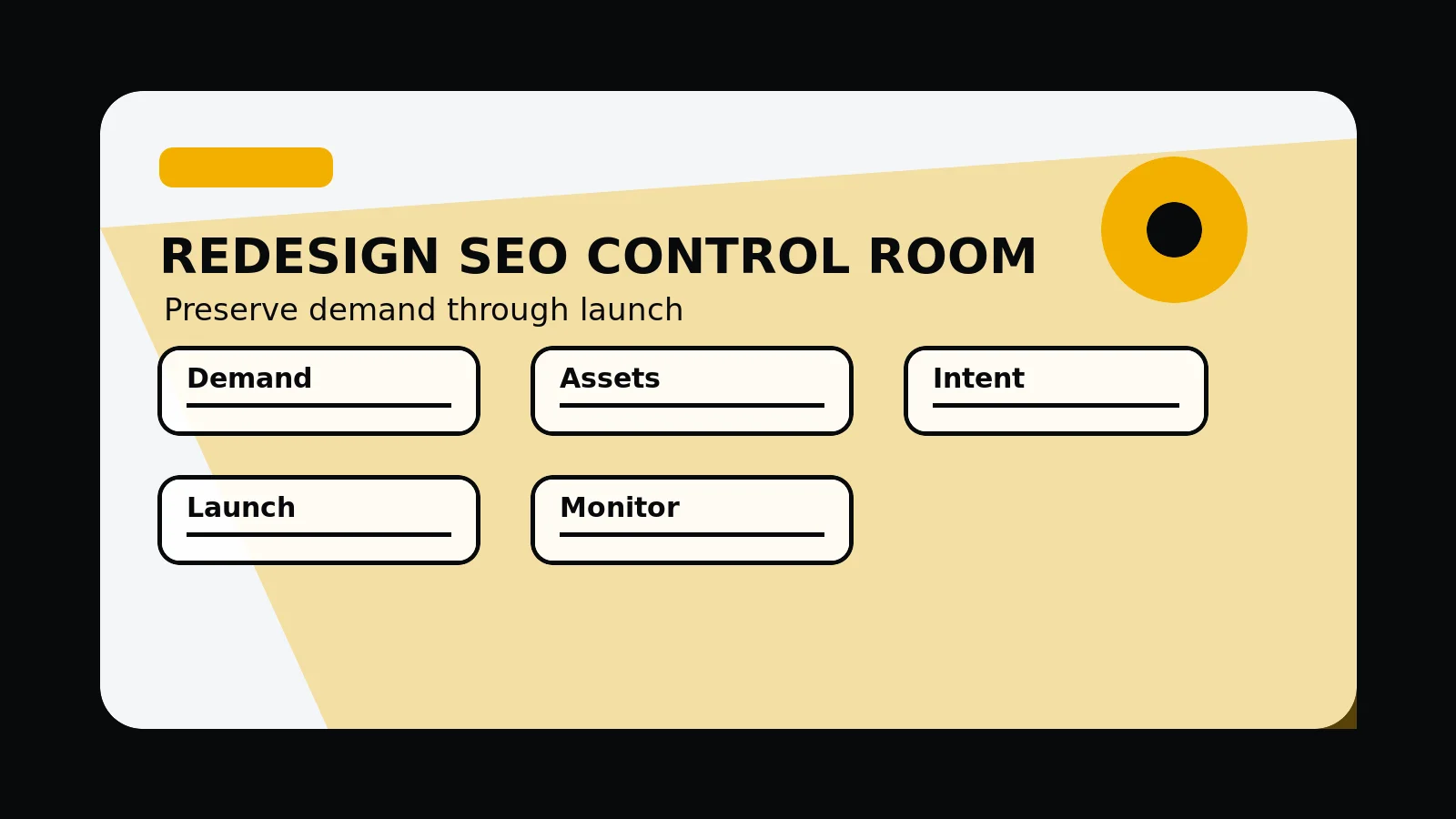
Prepare these inputs before page layouts are signed off so preservation decisions are based on current visibility and business value.
- Search demand snapshot
- Protected-page register
- Template intent notes
- Staging signal review
- Post-release watchlist
Redesign SEO preservation plan
- Baseline: export query groups, landing pages, enquiries, backlinks, and current indexable routes.
- Protected assets: mark pages, supporting detail, sections, headings, FAQs, internal links, and assets that should survive.
- New architecture: connect retained intent to the new navigation, templates, and conversion paths.
- Staging rehearsal: check rendered HTML, canonicals, schema, images, forms, sitemap, and redirects.
- Post-release watch: monitor priority routes, 404s, rankings, form flow, sitemap coverage, and Search Console signals.
Common mistakes to avoid
- Approving visual structure before search-critical pages are inventoried.
- Rewriting successful pages without preserving buyer intent or internal-link context.
- Launching without a named owner for the first 30 days of SEO monitoring.
What 760 Studios would review first
- Search demand that must be protected
- Design decisions that could remove useful content
- Launch and post-launch monitoring gaps
Questions this article answers
How early should SEO be involved in a redesign?
SEO should be involved before page architecture and design review. The team needs to know which pages, links, copy sections, and search intents should shape the new structure.
What should not change without detail?
Do not change high-value URLs, headings, useful copy sections, internal links, supporting detail, metadata, or page purpose without checking traffic, enquiries, backlinks, and buyer value.
How do you protect rankings during a redesign?
Protect rankings by preserving useful intent, avoiding unnecessary page loss, testing rendered output, using relevant redirects, and watching priority pages after launch.
What should be watched after launch?
Watch 404s, crawl coverage, priority query groups, landing-page traffic, form submissions, sitemap inclusion, redirect behaviour, and important pages that changed heavily.