Quick answer
What Makes A Website Feel High-end?
A website feels high-end when it is plain, composed, specific, fast, and credible. High-end design comes from confident positioning, strong typography, balanced spacing, purposeful imagery, visible supporting detail, polished mobile behaviour, and restrained interaction rather than decoration alone.
High-end feel comes from controlled execution detail
A website feels high-end when it explains the offer quickly, uses consistent typography and spacing, shows credible supporting detail, handles imagery carefully, works well on mobile, and stays fast.
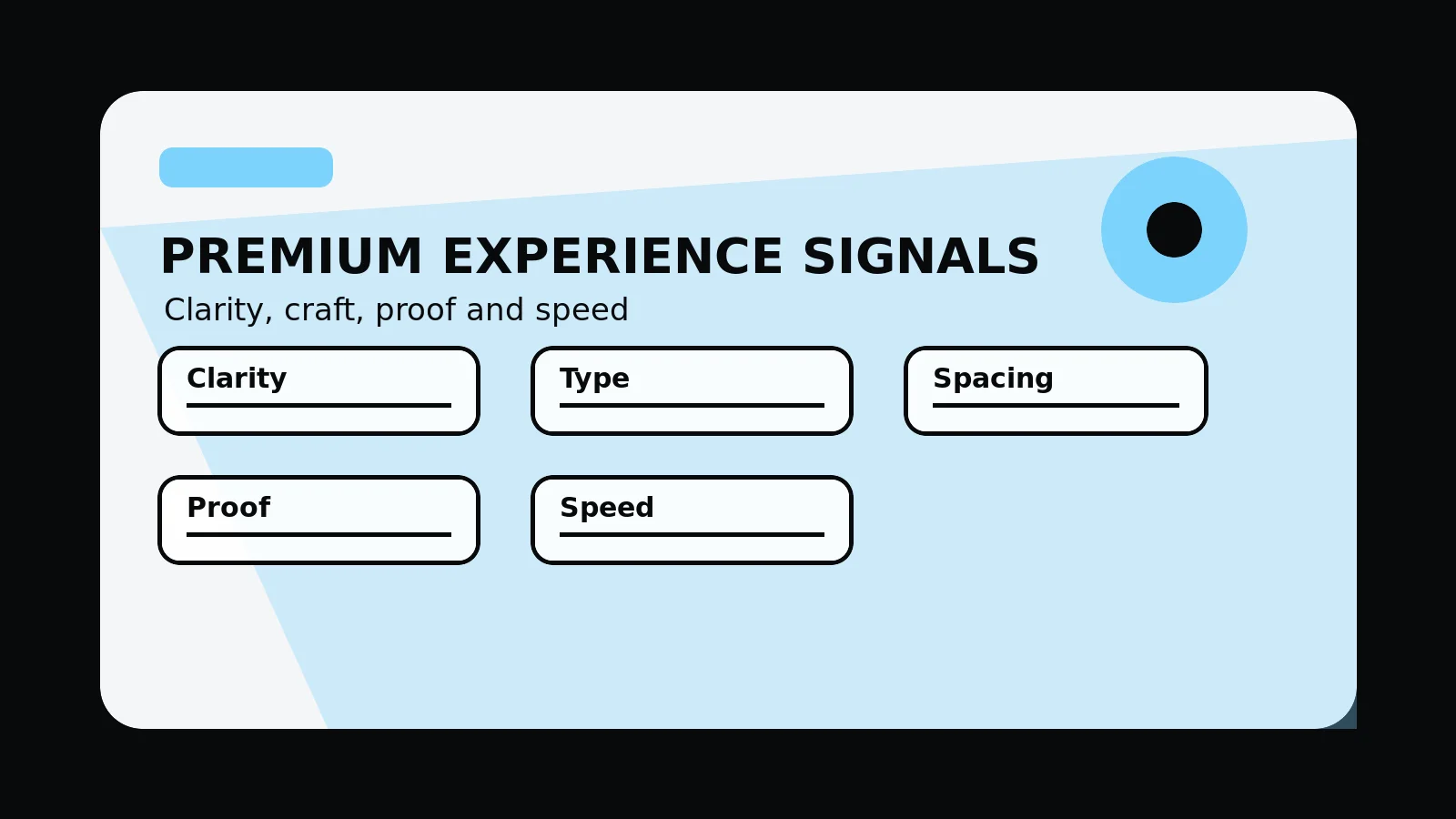
The high-end impression is created by clarity, rhythm, supporting detail, polish, and speed working together rather than by decoration alone.
Send the homepage and one service page and we will identify which details weaken the high-end impression.
Get a 3-point project reviewReview the signals buyers notice
Use these signals to separate genuine high-end execution detail from surface styling that does not improve trust or usability.
- plain positioning before decorative language
- Readable type scale and line lengths
- Consistent spacing and section rhythm
- Intentional imagery and supporting detail placement
- Mobile polish equal to desktop
- Fast, stable pages without unnecessary scripts
detail for a high-end-execution detail review
Bring these assets so the review can compare visual finish, mobile detail, supporting detail placement, and performance as one experience.
- High-end execution detail checklist
- Homepage clarity test
- Mobile screenshot review
- Image and performance audit
- supporting detail placement map
High-end website execution detail signals
- Positioning: plain offer, confident hierarchy, specific audience, and no inflated claims.
- Craft: typography, spacing, image treatment, content rhythm, interaction states, and responsive detail.
- supporting detail: relevant work, process detail, testimonials, screenshots, or carefully labelled examples.
- Performance: stable layouts, controlled media, fast pages, and no unnecessary scripts.
- Conversion: calm CTAs, useful contact route, pricing or engagement cues, and low-friction forms.
Common mistakes to avoid
- Using decoration to cover unclear positioning, weak supporting detail, or thin service content.
- Making desktop look polished while mobile text, spacing, buttons, and imagery feel unfinished.
- Equating high-end with heavy animation, oversized media, and slow page loads.
What 760 Studios would review first
- First-viewport high-end impression
- supporting detail and visual-execution detail gaps
- Mobile details that reduce trust
Questions this article answers
What is the first thing that makes a website feel high-end?
The first signal is clarity. Buyers should quickly understand the offer, audience fit, level of execution detail, and next route without decoding vague language or cluttered layouts.
Do high-end websites need lots of animation?
No. Motion can help when it supports attention and orientation, but excessive animation can feel slow, distracting, or less trustworthy.
How does supporting detail affect high-end perception?
supporting detail makes high-end claims believable. Relevant work, confirmed screenshots, method detail, testimonials, and process detail carry more weight than polished but unsupported copy.
Why does mobile design affect high-end feel?
Many buyers check a site on mobile first. If spacing, text, navigation, images, and forms feel cramped or unstable, the high-end impression breaks.