Quick answer
B2B Website Architecture: Homepage, Services, Sectors And supporting detail
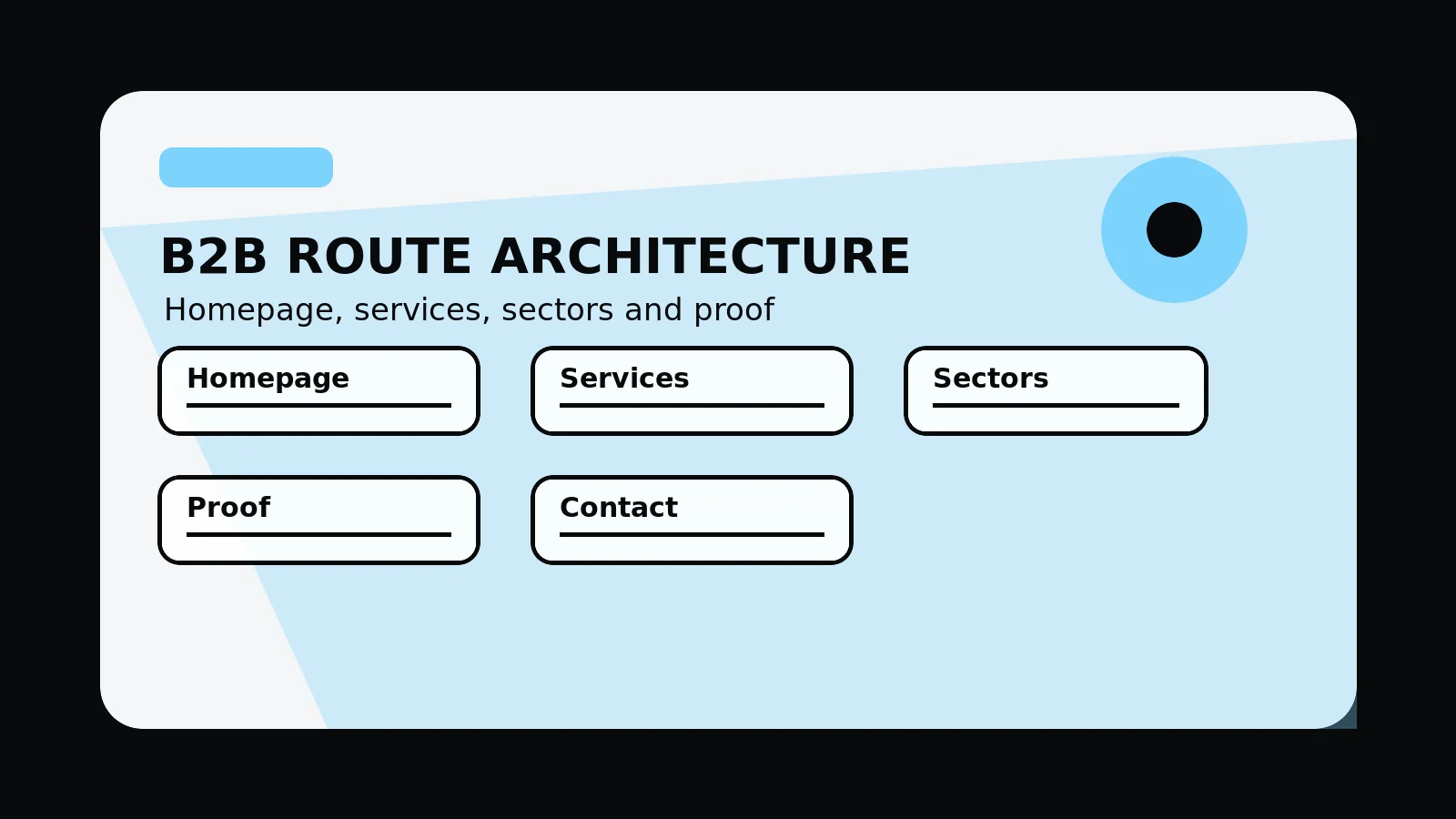
B2B website architecture should route buyers from positioning to service detail, sector or audience context, supporting detail, process, pricing signals, FAQs, and contact. Each route should reduce risk for a specific stakeholder or buying question.
B2B architecture should reduce evaluation risk
A B2B website usually needs a homepage, service pages, sector or audience pages where useful, supporting detail, process, pricing or engagement route, FAQs, and contact or project brief.
The structure needs to serve several stakeholders without making every page carry every detail at once.
Send the current sitemap and we will map whether B2B buyers can find fit, supporting detail, risk, and next steps.
Get a 3-point project reviewSeparate routes by decision role
Use these routes to decide which pages explain positioning, scope, supporting detail, process, pricing context, and enquiry fit.
- Homepage explains positioning and routes
- Service pages clarify scope and fit
- Sector pages add context only when distinct
- supporting detail reduces risk
- Process explains delivery
- Pricing route qualifies buyers
- Contact route captures useful context
Planning inputs for the architecture
Prepare these inputs before changing navigation so the site structure reflects how complex buyers actually evaluate offers.
- B2B sitemap
- Service hierarchy
- Stakeholder map
- supporting detail inventory
- Internal-link plan
B2B route architecture
- Homepage: category, audience, positioning, supporting detail cue, and route options.
- Service pages: scope, fit, process, supporting detail, FAQs, pricing context, and CTA.
- Sector or audience pages: only where the context is distinct enough to justify a route.
- supporting detail: case studies, work examples, method detail, and delivery working rules.
- Conversion: project brief, contact, sales handoff, and qualification signals.
Common mistakes to avoid
- Trying to make the homepage carry every stakeholder detail.
- Publishing sector pages that repeat service copy without distinct context.
- Separating supporting detail from the service pages where buyers need it.
What 760 Studios would review first
- Homepage and service-route clarity
- Sector page execution detail threshold
- Internal links between supporting detail and commercial pages
Questions this article answers
What pages does a B2B website usually need?
A B2B site usually needs a homepage, service pages, supporting detail or case studies, process, pricing or engagement context, FAQs, contact, and sector or audience pages only where they add distinct value.
When should a sector page exist?
A sector page should exist when it can explain a distinct buyer problem, supporting detail angle, risk, process need, or decision context. It should not be a copied service page.
Where should supporting detail be placed?
supporting detail should appear on the supporting detail page and near the service or stakeholder decision it supports. Buyers should not have to leave the journey to find credibility.
How should B2B architecture support SEO and AEO?
It should use distinct pages, plain headings, internal links, structured data, direct answers, and visible supporting detail so crawlers and answer systems can understand each route.