Quick answer
Homepage, Service Pages, Case Studies And Contact: The Business Website Structure
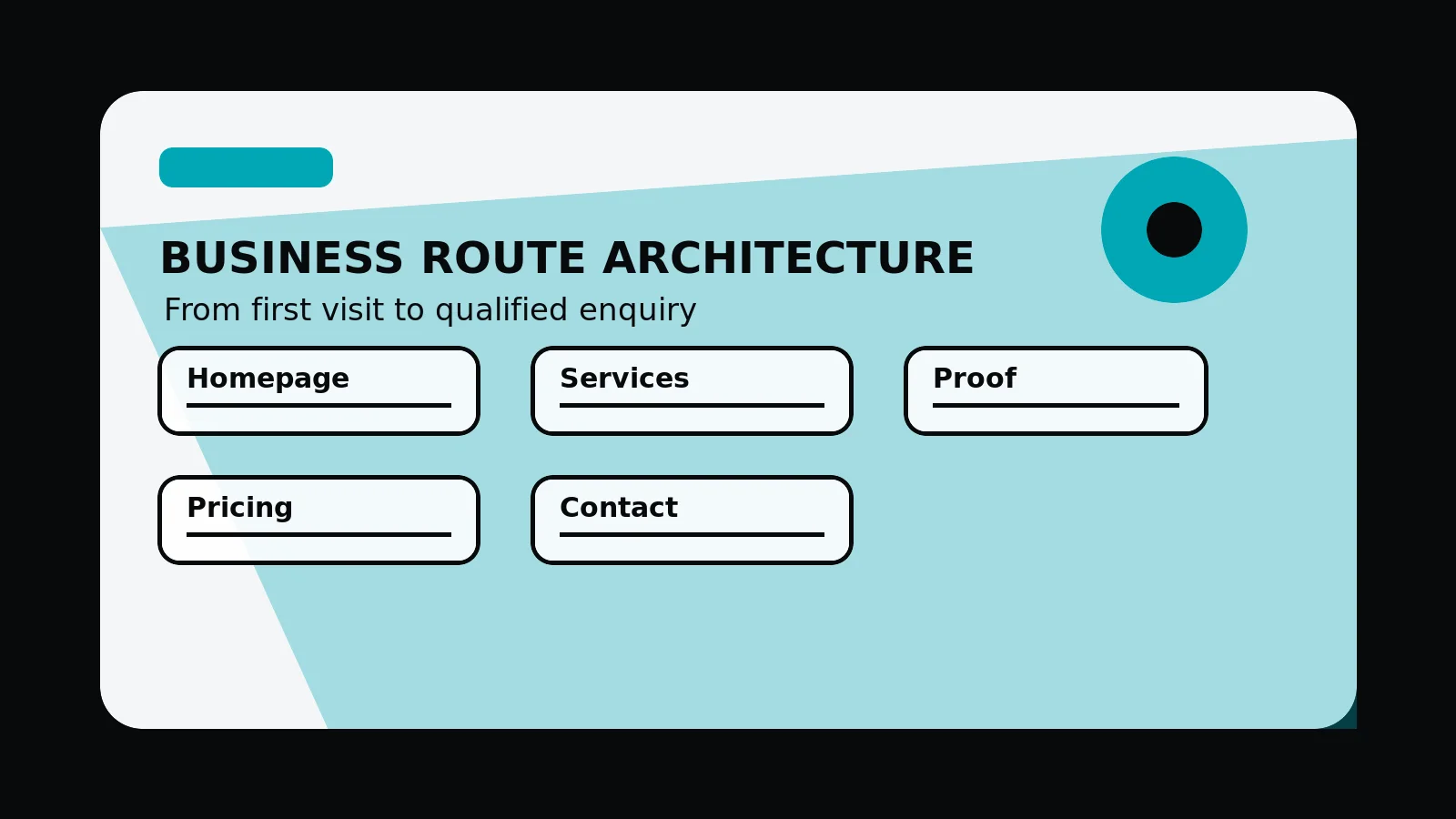
The core business website structure is homepage, service overview, service detail pages, supporting detail or case studies, about, process, pricing or engagement signals, FAQs, and contact. Each route should answer a different buyer question and link to the next useful step.
Structure should follow the buyer journey
The core structure is homepage, services, individual service pages, supporting detail or case studies, about, process, pricing or engagement route, FAQs, and contact or project brief.
The core routes need separate jobs, because a homepage, service page, supporting detail page, and contact page each answer a different stage of evaluation.
Send the current navigation and we will map whether each route supports the buyer journey.
Get a 3-point project reviewMap each route to a decision
Use these route jobs to see whether the navigation supports understanding, supporting detail, risk reduction, and enquiry.
- Homepage answers who, what, for whom, and why now
- Service pages explain scope and decision criteria
- supporting detail pages show detail where supported
- Process page reduces delivery risk
- Pricing route sets commercial expectations
- Contact route matches buyer intent
Planning assets for the structure
Prepare these assets before changing navigation so each page earns its place in the journey.
- Page-to-intent map
- Navigation sketch
- Internal link plan
- supporting detail availability list
- CTA route map
Business website route map
- Homepage: identify the business, offer, buyer, supporting detail cue, and next route.
- Service pages: explain problems, scope, deliverables, supporting detail, FAQs, and conversion path.
- supporting detail pages: show confirmed detail, constraints, decisions, and outcomes without overclaiming.
- Process and pricing: reduce delivery and commercial uncertainty before contact.
- Contact: match intent with project brief, call request, email, privacy wording, and confirmation.
Common mistakes to avoid
- Letting navigation mirror company departments instead of buyer decisions.
- Sending every CTA to contact before service fit and supporting detail have been explained.
- Publishing case-study claims without context, review, or supporting detail.
What 760 Studios would review first
- Navigation and route purpose
- Where supporting detail should appear in the journey
- CTA paths that need less friction
Questions this article answers
How should a business website navigation be organised?
Organise navigation around buyer decisions: services, work or supporting detail, process, pricing, contact, and any sector or location routes that add specific value.
Where should case studies sit in the structure?
Case studies should support service and supporting detail journeys. Link them from relevant service pages and avoid using them as isolated portfolio items with no commercial context.
Why does contact page design matter?
The contact page is part of the buying journey. It should explain the expected next step, ask for useful context, handle errors, and confirm what happens after submission.
What should internal links do?
Internal links should connect related services, supporting detail, process, pricing, guide content, and contact routes so buyers and crawlers can understand the page hierarchy.