Quick answer
Who Needs To Provide Content During A Website Project?
Website content should come from the people closest to positioning, sales questions, service delivery, marketing data, supporting detail, technical accuracy, and final review. The agency can structure, edit, and improve it, but internal owners must provide the facts.
Content needs named internal owners
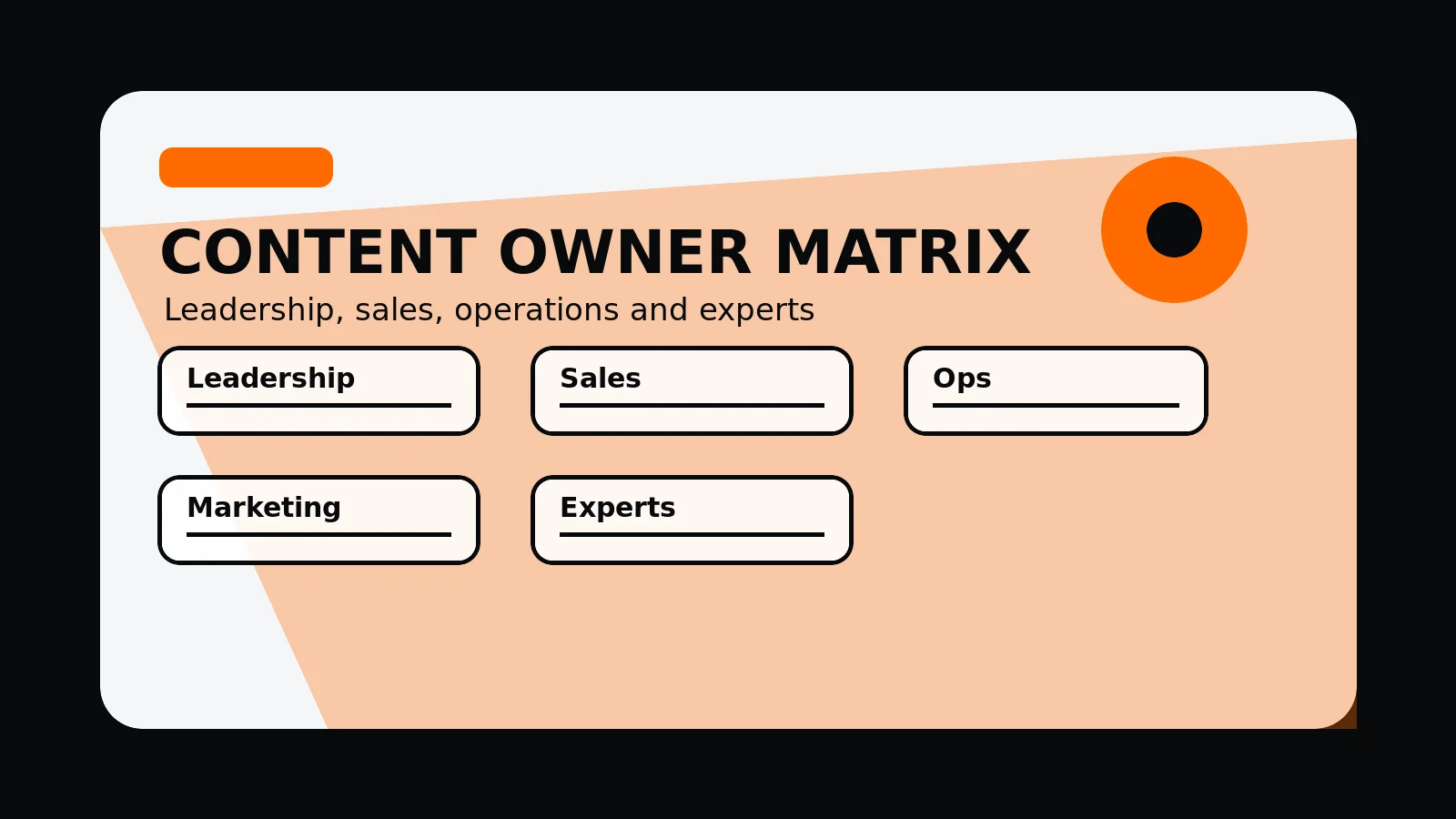
Leadership should provide positioning and goals, sales should provide objections and qualification criteria, operations should provide delivery detail, marketing should provide content and analytics context, and subject experts should verify accuracy.
The agency can shape and improve the copy, but the facts need to come from people who understand positioning, sales objections, delivery, supporting detail, and review limits.
Send the page list and we will assign the missing content owners before the design phase gets stuck.
Get a 3-point project reviewAssign inputs by expertise
Use these ownership areas to stop content from becoming a single-person bottleneck or a late-stage guessing exercise.
- Leadership: positioning, audience, and commercial goals
- Sales: objections, questions, and lead fit signals
- Operations: process, scope boundaries, and delivery reality
- Marketing: content inventory, SEO, analytics, and campaign context
- Subject experts: technical or service accuracy
- Final approver: compliance, tone, and launch sign-off
Inputs that unblock writing and design
Gather these materials before layouts are confirmed so accuracy, supporting detail, and sign-off are built into the project timeline.
- Content owner matrix
- Source document list
- supporting detail asset inventory
- Review and review timeline
- Launch sign-off checklist
Website content ownership map
- Leadership: positioning, commercial goals, priority audiences, and publishing boundaries.
- Sales: objections, buyer questions, qualification criteria, and enquiry fit signals.
- Operations: delivery process, scope limits, timelines, dependencies, and service reality.
- Marketing: existing content, campaigns, analytics, SEO targets, and editorial management.
- Subject experts: technical accuracy, supporting detail limits, compliance concerns, and final verification.
Common mistakes to avoid
- Expecting an agency to invent accurate service detail without access to internal knowledge.
- Leaving supporting detail, approvals, and technical accuracy until the last week before launch.
- Assigning content to one person who lacks authority over sales, operations, and final sign-off.
What 760 Studios would review first
- Which pages lack a content owner
- Which supporting detail assets need review
- Where expert input is needed before design
Questions this article answers
Who should provide the first website content inputs?
Leadership should provide goals and positioning, sales should provide objections, operations should provide delivery detail, marketing should provide content and SEO context, and subject experts should verify accuracy.
What content should be gathered before design starts?
Gather service descriptions, audience notes, supporting detail assets, case-study context, pricing or engagement cues, FAQs, policies, technical requirements, and review constraints.
Can an agency write the content?
Yes, but the agency still needs accurate inputs. Strong copywriting turns internal knowledge into plain page content; it should not invent claims, supporting detail, or service details.
Why does late content slow website projects?
Late content forces layout changes, supporting detail gaps, review delays, weaker SEO, and rushed launch decisions. Content ownership should be set before design hardens.